


Subscribe to RSS
 Download PDF

DOI: 10.1055/s-0043-1775504
Sterically Controlled Template-Assisted Macrocyclization of Hemisquaraine Rotaxanes: Synthesis, Characterization, and DFT Calculations
Authors
This work was supported by the National Research Foundation of Ukraine, project No. 2023.05/0003 titled ‘Development of new materials based on supramolecular systems for biomedical and veterinary applications’.

Abstract
The encapsulation of squaraine dyes within a tetralactam macrocycle effectively mitigates their intrinsic limitations while maintaining favorable optical properties and improving both chemical and photochemical stability. However, the synthesis of such rotaxanes remains challenging due to the intricate balance of steric and electronic factors governing the macrocyclization. In this study, a series of rotaxanes derived from hemisquaraine dyes bearing primary and secondary amino groups was successfully synthesized using an oxocyclobutenolate template-assisted macrocyclization approach. Dyes with bulky tertiary amino groups, however, failed to undergo encapsulation. Upon encapsulation, the rotaxane systems in chloroform exhibited red-shifted absorption and emission bands, along with a substantial increase in fluorescence quantum yield. This enhancement is attributed to the restricted vibrational and rotational motions of the encapsulated dye. DFT calculations confirmed that all studied rotaxanes are thermodynamically viable, suggesting that the synthetic difficulties observed for tertiary amine derivatives arise from kinetic constraints. This hypothesis was supported by DFT calculations that simulated the macrocyclization process from the corresponding open-chain precursors. These calculations showed favorable energetics for hemisquaraine dyes that contain primary and secondary amino groups. In contrast, the significant steric effects of tertiary amino groups render the oxocyclobutenolate template-assisted macrocyclization energetically unfavorable.
Key words
template-assisted macrocyclization - squaraine dye - DFT calculations - fluorescence - rotaxane - organic synthesis - optical absorption - supramolecular systemSquaraine dyes are a versatile class of organic chromophores known for their strong molar absorptivity, high fluorescence quantum yields, and intense, narrow absorption and emission bands that span the visible to near-infrared (NIR) region.[1] [2] [3] [4] Despite these attractive properties, their broader application is often limited by susceptibility to nucleophilic attack and aggregation-induced self-quenching. To overcome these drawbacks, various protective strategies have been investigated.[5] Encapsulation within micelles[6] or liposomes[7] has shown moderate success in shielding the dyes from degradation and aggregation. Similarly, supramolecular host–guest systems using macrocyclic hosts such as cyclodextrins[8] [9] or cucurbiturils[10] [11] have been explored, though they often suffer from inherent reversibility and limited long-term stability.[12] A more robust solution was demonstrated by Smith and co-workers, who encapsulated squaraine dyes as the thread component in a mechanically interlocked rotaxane architecture.[13] [14] This design significantly enhances the photostability of the dye and its chemical robustness and photophysical characteristics.[1] [5] [15]
Over the past two decades, squaraine rotaxanes formed by encapsulation of dyes into tetralactam macrocycle have evolved into powerful supramolecular systems with promising applications in chemical sensing,[16] [17] quantum information science,[18,19] molecular switching,[20] and in particular, biological imaging.[21] [22] [23] [24] Notably, most studies to date have focused on NIR-emissive squaraine rotaxanes due to their deep tissue penetration and minimal background interference in biological environments. In contrast, reports on short-wavelength squaraine-based interlocked systems remain scarce,[25] [26] despite their potential utility in multiplexed imaging, visible-region sensing, and photonic applications.
Our attention was therefore drawn to structurally related, yet spectrally distinct, hemisquaraine dyes, which absorb at shorter wavelengths.[27] Hemisquaraines are polymethines incorporating a squaric acid core within the conjugated chain, flanked by a nitrogen-containing unsaturated heterocycle on one end and either acyclic or saturated cyclic nitrogen on the other, with a delocalized positive charge distributed between them. Inspired by our previous work[27] demonstrating hemisquaraines as effective environment-sensitive sensors, we sought to study their integration into mechanically interlocked rotaxane architectures aiming to expand the structural and application landscape of squaraine-based rotaxane systems and to unlock new possibilities for advanced sensing and functional materials.
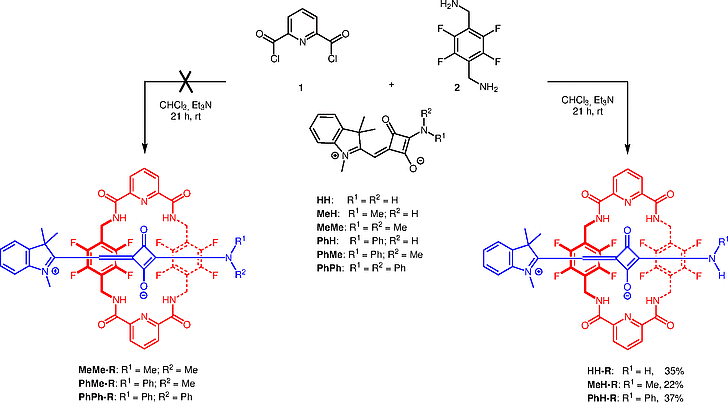
In this work, we report for the first time an investigation into the possibility of synthesizing hemisquaraine-threaded rotaxanes through the encapsulation of indolenine-based hemisquaraine dyes, bearing primary (HH), secondary (MeH, PhH), and tertiary (MeMe, PhMe, PhPh) amino groups, within tetralactam macrocycles (Figure [1]). Our initial task was to explore whether the formation of rotaxane systems is feasible. If dye encapsulation could be achieved, a key follow-up question was whether the terminal amino groups would be sufficiently bulky to act as stoppers, preventing unthreading and enabling the formation of stable rotaxane architectures. Quantum chemical calculations were employed to rationalize the experimental outcomes and to gain deeper insight into the structural and electronic factors governing rotaxane formation.

Synthesis of Hemisquaraine Rotaxane Dyes
Indolenine-based hemisquaraines containing primary (HH), secondary (MeH, MeMe), and tertiary (PhH, PhMe, PhPh) amino groups were synthesized using our previously developed procedure (Scheme [1]).[27]

The synthesis of hemisquaraine rotaxane dyes was carried out using a known approach,[26] employing the oxocyclobutenolate fragment of squaraine as a template to form a tetralactam macrocycle through hydrogen bonding interactions (Scheme [2]). The rotaxane structures were synthesized by the slow, simultaneous addition of pyridine-2,6-dicarbonyl dichloride and a mixture of 2,3,5,6-tetrafluoro-1,4-xylylenediamine with triethylamine to a solution of the hemisquaraine dye in chloroform at room temperature over 5 hours using a syringe pump. It is worth noting that 2,3,5,6-tetrafluoro-1,4-xylylenediamine was chosen over the non-fluorinated 1,4-xylylenediamine to increase the acidity of the diamine/amide N–H groups and, consequently, to strengthen the noncovalent interactions that drive the template-directed rotaxane formation. Reaction progress was monitored by TLC and by measuring absorption and emission spectra. Appearance of a new colored spot with higher Rf on TLC along with a pronounced enhancement in fluorescence intensity was observed for dyes bearing primary (HH) and secondary (MeH, PhH) amino groups, providing clear evidence of successful rotaxane formation. In contrast, derivatives containing tertiary amines (MeMe, PhMe, PhPh) showed no changes in TLC, absorption or emission spectra, and no fluorescence enhancement, suggesting that steric hindrance likely prevents efficient macrocycle formation in these cases.
Spectral Properties of Hemisquaraine Rotaxane Dyes
The spectral properties of the dyes (HH, MeH, and PhH) and their corresponding rotaxane systems (HH-R, MeH-R, and PhH-R) were investigated in chloroform and methanol. The absorption and emission maxima (λmax), full widths at half maxima (FWHM), as well as fluorescence quantum yields (ΦF) measured at a concentration of approximately 1 μM, are summarized in Table [1]. The corresponding absorption and emission spectra are presented in Figure [2].
As shown in Figure [2], encapsulation of hemisquaraine dyes HH, MeH, and PhH in a tetralactam macrocycle induces red shifts in both absorption and emission bands in chloroform. This red shift is indicative of squaraine encapsulation and can be explained by attenuated deformation of the terminal amine substituents upon macrocycle encapsulation.[28] A shift of 5 nm was observed for the absorption band in the case of MeH-R and PhH-R and of 2 nm for HH-R. Encapsulation also alters the spectral band shape: in chloroform, a slight decrease in the intensity of the vibrational bands is observed in both absorption and emission (Figures [2a, 2c], and 2e). This effect was typically accompanied by a reduction in the FWHM of these bands (Table [1]), which suggests increased rigidity of the dye structures upon encapsulation. In methanol, HH-R exhibits even larger red shifts than in chloroform with shifts of 4 nm in absorption and 7 nm in emission (Figure [2b]).

In contrast, for MeH-R and PhH-R, no such effect is observed: their absorption and emission maxima in methanol remain unchanged upon encapsulation, suggesting dissociation of the complexes into the starting components (Figures [2d] and 2g). This phenomenon is likely due to the ability of methanol to form hydrogen bonds with the NH groups of the macrocycle and/or the carbonyl groups of the squaraine fragment, thereby weakening intracomplex hydrogen bonding and promoting disassembly of the supramolecular structure. By contrast, in non-polar solvents such as chloroform, the hemisquaraine rotaxane architecture is stabilized by a synergistic combination of non-covalent interactions: aromatic stacking between the oxocyclobutenolate core of the squaraine thread and the 1,4-xylylene units of the macrocycle, together with strong hydrogen bonding between the four macrocyclic NH groups and the two carbonyl oxygens of the squaraine core. Notably, a similar solvent-dependent destabilization of squaraine-based rotaxanes has been reported in the literature, where complexes with small stopper groups remain intact in chloroform but undergo unthreading in more polar solvents such as DMSO.[29] In the case of HH-R, intracomplex hydrogen bonding appears to be further reinforced by two additional hydrogen atoms, resulting in enhanced stability of this supramolecular complex in methanol.
Consistent with literature reports showing that encapsulation of squaraine dyes in a tetralactam macrocycle enhances their fluorescence intensity,[30] the formation of the rotaxane systems HH-R, MeH-R, and PhH-R were likewise confirmed by an increase in fluorescence quantum yield in chloroform (Table [1]). Upon encapsulation, fluorescence quantum yields increased by factors of approximately 1.6, 7.9, and 2.2 for HH-R, MeH-R, and PhH-R, respectively, relative to the corresponding free dye (Table [1]). A similar enhancement has previously been reported for other squaraine rotaxanes and was attributed to the reduced vibrational and rotational motions of the encapsulated squaraine core, which suppresses non-radiative excited-state relaxation pathways.[24] [31]
DFT Calculations of Hemisquaraine Rotaxanes
To clarify these experimental results, we investigated the structure of all the examined rotaxanes containing primary, secondary, and tertiary amine groups using DFT calculations. We analyzed the binding energy and the nature of the intermolecular interactions between the hemisquaraine dyes and the tetralactam macrocycle. Additionally, we calculated the process of tetralactam macrocycle formation around an oxocyclobutenolate template, starting from the corresponding open chain precursors. This analysis aimed to understand how the size and type of amino group substitutions in hemisquaraine dye molecules influence the sterically controlled formation of rotaxanes.
Rotaxane macrocycles featuring 1,4-phenylene sidewalls and 2,6-pyridinedicarboxamide bridging units can adopt both chair and boat conformations in solution.[26] The presence of simple carbon–carbon and amide bonds between bridging units allows for some structural flexibility, enabling an exchange between these two conformations.[32] This flexibility facilitates complementary adjustments for accommodating different guest molecules.[33]
Figure [3] illustrates the chair and boat conformations of the rotaxane macrocycle, which features 2,3,5,6-tetrafluoro-1,4-phenylene sidewalls that have been optimized at the B3LYP-D3/cc-pVDZ level. In both conformations, though they have different cavity sizes, the macrocycle features two parallel sidewalls made of 2,3,5,6-tetrafluoro-1,4-phenylene. The chair conformation is characterized by a larger, rectangular inner cavity, measuring 6.93 × 9.49 Å (Figure [3a]). In contrast, the boat conformation has reduced rectangular dimensions of 6.45 × 8.75 Å (Figure [3b]). From an energetic perspective, the boat conformation is slightly more stable than the chair conformation, with a difference of only 0.35 kcal/mol.

Next, we analyzed the hemisquaraine rotaxanes by optimizing the geometry of their inclusion structures. While we evaluated rotaxane systems with both chair and boat conformations of the macrocycle, we found that, except for PhPh-R, the most stable architectures were generally observed in the chair conformation, as summarized in Figure [4]. Additionally, the structures of the obtained rotaxanes HH-R, MeH-R, and PhH-R were compared with hypothetical structures for similar rotaxanes, such as MeMe-R, MePh-R, and PhPh-R, for which the encapsulation of the hemisquaraine dye within the macrocycle has not yet been experimentally confirmed (see Scheme [2]).

The notable feature of the optimized structure of the hemisquaraine rotaxanes is that due to some flexibility of the tetralactam macrocycle it can still accommodate the hemisquaraine dye bearing bulky substituents, such as an amino group with two methyl or phenyl substituents. To minimize the steric strengths, the tetralactam macrocycle adopts some extended conformations, as seen for MeMe-R in Figure [4c]. In the case of PhPh-R, all attempts to optimize the stable rotaxane structure starting from different initial conformation of the macrocycle, ended up with the rotaxane with the boat conformation (Figure [4f]).
Table [2] summarizes the formation energy of the hemisquaraine rotaxanes corrected for zero-point energy. Our DFT calculations revealed that the formation of all studied rotaxanes is thermodynamically favorable, ranging from –60.04 to up to –64.45 kcal/mol. These findings suggest that the failure of our attempts to obtain rotaxanes containing encapsulated hemisquaraine dyes with tertiary amino groups, such as MeMe-R, PhMe-R, and PhPh-R (Scheme [2]), might be due to kinetic effects.
|
Rotaxane |
E (kcal/mol) |
|
HH-R |
–60.04 |
|
MeH-R |
–64.21 |
|
MeMe-R |
–61.15 |
|
PhH-R |
–64.45 |
|
PhMe-R |
–60.42 |
|
PhPh-R |
–60.89 |
Figure [5] illustrates the short-range interactions between a hemisquaraine dye and the macrocycle in the corresponding rotaxanes, as estimated by B3LYP-D3/cc-pVDZ calculations. A notable characteristic of these hemisquaraine rotaxanes is the establishment of cooperative multipoint hydrogen bonding between the dye and the macrocycle. Specifically, in the case of the rotaxanes containing the primary and secondary amine in hemisquaraine dyes, such as HH-R, MeH-R, and PhH-R, four hydrogen bonds C=O···HN- form between the carbonyl oxygens of the hemisquaraine oxocyclobutenolate core and the amide NH groups of the tetralactam macrocycle. The average lengths of these hydrogen bonds range from 2.048 Å to 2.100 Å that agrees well with values of 2.014–2.015 Å reported for the X-ray structure of other squaraine rotaxanes with similar architecture.[13] Furthermore, the nitrogen atom of the pyridyl moiety also forms a hydrogen bond N···HN- with the hydrogen of the primary or secondary amino group in the dye, with bond lengths ranging from 2.075 Å to 2.195 Å (Figure [5], top). In the case of the rotaxanes that contain the tertiary amine in hemisquaraine dyes, such as MeMe-R, PhMe-R, and PhPh-R, the absence of the amino group hydrogen atom capable of such hydrogen bonding with the macrocycle has in fact little impact on the structure of other hydrogen-bonded network formed by the carbonyl group of hemisquaraines with the amide moieties. The length of these H-bonds ranges from 1.880 Å to 2.005 Å. Even for the most sterically hindered rotaxane, PhPh-R, these H-bonds do not exceed 2.122 Å, as shown in Figure [5], bottom.

The studied hemisquaraine rotaxanes are synthesized using the oxocyclobutenolate moiety as a template. In such a templated synthesis, a oxocyclobutenolate core helps to bring together four molecules, so that four new covalent bonds are formed.[33] [34] The key step is the final amide-bond formation that clips the tetralactam around the oxocyclobutenolate template.[33] Therefore, the failure to obtain hemisquaraine rotaxanes bearing the tertiary amino group in the dye molecule, such as MeMe-R, PhMe-R, and PhPh-R, might be due to some steric effects and unfavorable conformation in the immediate open chain precursor for macrocyclization.
The hemisquaraine dye may act as the template, guiding the formation of the tetralactam macrocycle around it.[35] [36] Therefore, we carried out additional DFT calculations, which mimics the formation of the final amide bond in the tetralactam macrocycle from its immediate open chain precursor.
The structures of the open chain precursors (OCPs) were obtained by breaking one amide bond in the optimized hemisquaraine rotaxanes (Figure [5]) and terminating the resulting OCPs with amino (-NH2) and chloroanhydride (-COCl) groups. These OCP structures were then re-optimized using the same B3LYP-D3/cc-pVDZ method, as summarized in Figure [6]. Our DFT calculations demonstrate that the hemisquaraine dyes HH, MeH, and PhH serve as templates that wrap the OCPs around the corresponding oxocyclobutenolate core. This conformation allows the OCPs to position their terminal -NH2 and -COCl groups in close proximity and in the correct orientation to facilitate the further formation of a macrocycle. The distance between the terminal chloroanhydride carbon and the amino nitrogen atoms (C–N) was estimated to be 4.83 Å for HH-OCP, 4.81 Å for MeH-OCP, and 4.73 Å for PhH-OCP, as shown in Figure [6]. Additionally, this OCP conformation is stabilized by a hydrogen bond (–NH---N) formed between the hydrogen atom of the primary and secondary amino groups of hemisquaraine and the nitrogen atom of the terminating amino group. The corresponding hydrogen bond length (shown by blue dotted line in Figure [6]) were found to be 1.87 Å for HH-OCP, 1.93 Å for MeH-OCP, and 1.83 Å for PhH-OCP. In the case of MeMe-OCP, which features the hemisquaraine dye with a tertiary amino group, the C–N distance between the terminal OCP groups is elongated to 4.94 Å (Figure [6]). Finally, the steric hindrance present in PhMe-OCP causes the conformation of the triamide chain to unwind, resulting in a C–N distance that exceeds 7.9 Å.

To replicate the template-assisted macrocyclization in the studied dye-OCP structures, we conducted reaction path calculations (RPC) focusing on the distance between the terminal OCP groups (C–N), as illustrated in Figure [7]. Beginning with the optimized dye-OCP conformations, we systematically reduced the C–N distance from approximately 4.8 Å in increments of 0.1 Å, subsequently re-optimizing the new conformation at each step. This RPC procedure was repeated 35 times, leading to a gradual decrease in the C–N distance down to 1.4 Å, as summarized in Figure [7]. The RPC profile shows the total energy changes in the system as the amide bond forms. For HH-OCP, MeH-OCP, and PhH-OCP, the macrocyclization reaction encounters an initial small energy barrier of 1–1.5 kcal/mol at distances between 4.2 and 3.7 Å. This barrier may arise from steric effects and the need for proper orientation and proximity of the terminal amino (-NH2) and chloroanhydride (-COCl) groups. Following this, a second energy barrier of about 3 kcal/mol occurs at C–N distances of 2.5–2.3 Å, which is associated with the formation of the amide bond, after which there is a rapid decrease in energy. In contrast, the RPC indicates that for MeMe-OCP, this reaction pathway is energetically unfavorable at all scanned distances (Figure [7]). This suggests that significant steric effects within the dye-OCP complex hinder the final macrocyclization step and the clipping of the tetralactam around the MeMe dye.

Conclusion
In conclusion, a template-assisted macrocyclization reaction was used to encapsulate hemisquaraine dyes within a tetralactam macrocycle, resulting in the formation of a series of hemisquaraine rotaxanes. Encapsulation was confirmed for dyes with primary (HH) and secondary (MeH and PhH) amino groups. Upon encapsulation, the rotaxane systems exhibited a red shift in both absorption and emission bands in chloroform, which was accompanied by a significant increase in fluorescence quantum yield, showing enhancements of up to 7.9 times. These findings were attributed to the reduced vibrational and rotational motions of the encapsulated dyes.
In contrast, dyes with sterically hindered tertiary amino groups (MeMe, PhMe, and PhPh) did not undergo encapsulation within the tetralactam macrocycle, as evidenced by the absence of any spectral changes. Thus, we demonstrate that the template-assisted macrocyclization of hemisquaraine rotaxanes can be controlled through steric effects.
Complementary DFT calculations provided valuable insights into the structural and energetic features of the rotaxane systems. The optimized geometries showed that both chair and boat conformations of the tetralactam macrocycle can adjust to accommodate the hemisquaraine dye. Cooperative hydrogen bonding between the carbonyl oxygens of the dye and the amide NH groups of the macrocycle serves as the primary stabilizing interaction. Importantly, our calculations indicated that the formation of all studied rotaxanes, including those with bulky tertiary amino substituents (MeMe-R, PhMe-R, and PhPh-R), is energetically favorable. These findings suggest that the synthetic limitations observed experimentally are not due to thermodynamic factors but rather to kinetic barriers. Specifically, the challenges arise from the difficulty in forming a macrocycle around the hemisquaraine dye, which hinders the targeted formation of the interlocked structure.
We validated this hypothesis through DFT calculations on the structures of the corresponding open chain precursors (OCPs), followed by reaction path calculations (RPC) to mimic the macrocyclization process. Our results demonstrate that for HH-OCP, MeH-OCP, and PhH-OCP, the macrocyclization reaction can proceed with a low energy barrier of approximately 3 kcal/mol, leading to the formation of the amide bond and the assembly of the tetralactam macrocycle around the hemisquaraine dye. In contrast, for MeMe-OCP, the oxocyclobutenolate template-assisted macrocyclization is energetically unfavorable due to significant steric effects.
These findings deepen our understanding of the mechanistic aspects of hemisquaraine dye encapsulation within the tetralactam macrocycle and pave the way for the design and synthesis of new hemisquaraine rotaxanes.
Starting materials for the synthesis of the cited compounds were purchased from Career Henan Chemical Co. (China), Fluka Chemie AG, Sigma-Aldrich, Merck, and Tokyo Chemical Industry Co. (TCI). Aniline was distilled under reduced pressure before use. All reagents were commercially available and used without further purification, unless otherwise stated.
For the synthesis of rotaxanes multi-syringe infusion pump KDS 220 was used.
Thin layer chromatography (TLC) was conducted on pre-coated plates (Merck Silica gel 60 F254) with visualization by fluorescent indicator UV254 using mixtures of CHCl3/MeOH (9:1, 20:1) as eluents. Column chromatography was performed with silica gel (Merck Silica gel 60, 230–400 mesh ASTM) with gradient elution using CHCl3/MeOH mixtures.
HPLC analyses were performed on an Agilent 1100 module chromatograph equipped with DAD detector and LC column Luna Omega 5 μm C18 100 Å, 250 × 4.6 mm; mixtures of acetonitrile, water, and H3PO4 (0.05% vol.) served as eluents. Elution was implemented by the gradient scheme.
1H NMR and 13C NMR spectra were registered in CDCl3, DMSO-d 6, and CDCl3/CD3OD (3:1,) mixture using a Varian MR-400 spectrometer or a Bruker Avance III HD spectrometer at r.t. (400 MHz and 101 MHz for 1H and 13C, respectively). Internal references were δH(CDCl3) = 7.26, δC(CDCl3) = 77.16, δH(DMSO-d 6) = 2.50, δC(DMSO-d 6) = 39.52, δH(CD3OD) = 3.31, δC(CD3OD) = 49.00 ppm.
Mass spectra were acquired in MeOH containing 0.1% (v/v) formic acid using a Waters Micromass Quattro Micro API instrument with electrospray ionization (ESI). Spectra were recorded in ESI– at 120 °C with energy 3 kV on capillary.
The C, H, N elemental analysis was performed by a EuroVector Euro EA 3000 EA-IRMS elemental analyzer.
Melting points were measured using a Köfler hot bench apparatus.
Absorption spectra were recorded for the dye concentrations c ~ 1 μM in CHCl3 and MeOH. All the absorption spectra were recorded in 1 cm quartz cells at 25 °C using a PerkinElmer Lambda 35 UV/Vis spectrophotometer. Absorption maxima were determined with an accuracy of ±0.5 nm and rounded off.
Emission spectra were measured for the concentration c ~ 1 μM in CHCl3 and MeOH. The excitation wavelengths were 450 nm for HH and HH-R, 460 nm for MeH and MeH-R, 480 nm for PhH and PhH-R. The fluorescence measurements were done in 1 cm standard quartz cells at 25 °C using a Varian Cary Eclipse spectrofluorometer. The emission spectra were corrected for wavelength-dependent instrument sensitivity. Emission maxima were determined with an accuracy of ±1.0 nm.
Fluorescence quantum yields (ΦF). The integrated relative intensities of dyes and rotaxanes were measured in 1 cm cells against uranine (ΦF = 92% in 0.1 M aq NaOH)[37] as the reference dye. The quantum yields were calculated according to Equation 1.

Where ΦF,ref is the quantum yield of reference dye; F ref and F are the areas (integral intensities) of the emission spectra (F = ∫ I(λ)dλ) of reference dye and the dye under examination, respectively; A ref and A are the absorbencies at the excitation wavelength of reference dye and the dye under examination, respectively; and nD(media,ref) , nD(media) are the refractive indices of the solvent, where the reference dye and dye under examination are dissolved respectively.
The quantum yield of each sample was independently measured 3–4 times and the average value was taken. The reproducibility was within 5%.
Synthetic Procedures
Hemisquaraine dyes MeH, MeMe, PhH, PhMe and PhPh were prepared following our previously reported procedure.[27] The 1H and 13C NMR spectra recorded in DMSO‑d 6 are consistent with those reported earlier.[27] 1H and 13C NMR spectra of MeH and PhH were also recorded in CDCl3.
2-(Methylamino)-3-oxo-4-((1,3,3-trimethyl-3H-indol-1-ium-2-yl)methylene)cyclobut-1-en-1-olate (MeH)
Prepared from 3-hydroxy-4-((1,3,3-trimethylindolin-2-ylidene)methyl)cyclobut-3-ene-1,2-dione (110 mg, 0.41 mmol) and 41% aq MeNH2 soln (16.89 mg, 45.9 μL, 0.55 mmol). Yellow solid (72.66 mg, 63%, pure product); mp 280–285 °С; Rf = 0.46 (CHCl3/MeOH, 9:1).
1H NMR (400 MHz, CDCl3): δ = 9.99 (br. s, 1 H, NH), 7.33–7.20 (m, 2 H, ArH), 7.06 (t, J = 7.6 Hz, 1 H, ArH), 6.90 (d, J = 7.8 Hz, 1 H, ArH), 5.59 (s, 1 H, CH), 3.53 (d, J = 5.1 Hz, 3 H, NHCH 3), 3.40 (s, 3 H, NCH3), 1.60 (s, 6 H, C(CH3)2).
13C NMR (126 MHz, CDCl3): δ = 182.7, 177.0, 176.9, 176.1, 168.7, 143.2, 141.3, 127.7, 122.6, 122.0, 108.2, 83.9, 48.2, 31.8, 30.1, 27.5.
MS (ESI): m/z (%) = 281.03 (100) [M – H]–.
Anal. Calcd for C17H18N2O2: C, 72.32; H, 6.43; N, 9.92. Found: C, 72.37; H, 6.55; N, 9.95.
3-Oxo-2-(phenylamino)-4-((1,3,3-trimethyl-3H-indol-1-ium-2-yl)methylene)cyclobut-1-en-1-olate (PhH)
Prepared from 3-hydroxy-4-((1,3,3-trimethylindolin-2-ylidene)methyl)cyclobut-3-ene-1,2-dione (100 mg, 0.37 mmol) and freshly distilled aniline (45.63 mg, 44.7 μL, 0.49 mmol). Purple crystalline solid (113.3 mg, 89%, pure product); mp 309–312 °С; Rf = 0.60 (CHCl3/MeOH, 9:1).
1H NMR (400 MHz, CDCl3): δ = 7.99 (d, J = 7.6 Hz, 2 H, ArH), 7.41 (t, J = 7.7 Hz, 2 H, ArH), 7.37–7.29 (m, 2 H, ArH), 7.22–7.12 (m, 2 H, ArH), 7.03 (d, J = 7.6 Hz, 1 H, ArH), 5.84 (s, 1 H, CH), 3.56 (s, 3 H, NCH3), 1.77 (s, 6 H, C(CH3)2). The NH proton appears as a weak signal at δ = 10.45 ppm with an integration of 0.04, likely due to rapid exchange with trace water or solvent, leading to underestimation of its integration.
13C NMR (126 MHz, CDCl3): δ = 179.1, 175.9, 171.5, 160.6, 155.6, 137.6, 130.8, 129.4, 128.8, 128.0, 125.3, 123.9, 122.2, 120.3, 109.2, 85.6, 49.1, 30.4, 27.2.
MS (ESI): m/z (%) = 342.98 (100) [M – H]–.
Anal. Calcd for C22H20N2O2: C, 76.72; H, 5.85; N, 8.13. Found: C, 76.65; H, 5.86; N, 8.17.
2-Amino-3-oxo-4-((1,3,3-trimethyl-3H-indol-1-ium-2-yl)methylene)cyclobut-1-en-1-olate (HH)
Synthesized similarly to the procedure described in ref[27]: To a solution of 3-hydroxy-4-((1,3,3-trimethylindolin-2-ylidene)methyl)cyclobut-3-ene-1,2-dione (558 mg, 2.07 mmol) in n-BuOH (10 mL) was added NH4OAc (995 mg, 12.9 mmol), and the mixture was stirred at 95–100 °С for 12 h. The reaction was monitored by HPLC. After completion of the reaction, the solvent was removed under reduced pressure and the residue was column purified (CHCl3/MeOH from 100:0 to 97:3) to yield the target dye as a yellow solid (355.2 mg, 64%, pure product); mp 150–155 °C (decomp., turned black); Rf = 0.76 (CHCl3/MeOH, 20:1).
1H NMR (500 MHz, DMSO-d 6): δ = 9.51 (s, 2 H, NH2), 7.41 (d, J = 7.5 Hz, 1 H, ArH), 7.27 (t, J = 7.8 Hz, 1 H, ArH), 7.15 (d, J = 7.8 Hz, 1 H, ArH), 7.03 (t, J = 7.5 Hz, 1 H, ArH), 5.47 (s, 1 H, CH), 3.38 (s, 3 H, NCH3), 1.61 (s, 6 H, C(CH3)2).
13C NMR (101 MHz, DMSO-d 6): δ = 188.2, 178.4, 175.7, 167.2, 143.2, 140.6, 127.7, 122.1, 121.9, 108.9, 83.8, 83.7, 47.5, 29.7, 27.1.
MS (ESI): m/z (%) = 267.00 (100) [M – H]–.
Anal. Calcd for C16H16N2O2: C, 71.62; H, 6.01; N, 10.44. Found: C, 71.53; H, 6.11; N, 10.39.
Synthesis of Hemisquaraine Rotaxanes; General Procedure
To a solution of hemisquaraine dye HH, MeH, or PhH (1 equiv.) in CHCl3 (4 mL), a solution of pyridine-2,6-dicarbonyl dichloride (1; 4 equiv.) in CHCl3 (2 mL) and solution of (perfluoro-1,4-phenylene)dimethanamine (2; 4 equiv.) together with Et3N (10 equiv.) in CHCl3 (2 mL) were simultaneously added using a syringe pump at r.t. over 5 h under stirring. After complete addition of the reagents, the mixture was stirred for an additional 16 h at r.t. The resulting precipitate was filtered off, and the filtrate was concentrated under reduced pressure. The residue was purified by column chromatography (silica gel 60 using gradient elution).
Attempts to record the 1H NMR spectra of the hemisquaraine rotaxanes in DMSO-d 6 were unsuccessful due to decomposition of the complexes, and only spectra corresponding to the free dyes were observed. This behavior is consistent with literature reports for related squaraine rotaxane systems.[29]
Hemisquaraine Rotaxane HH-R
Prepared from hemisquaraine HH (58.5 mg, 0.218 mmol), 1 (177.9 mg, 0.872 mmol), and 2 (181.52 mg, 0.872 mmol). The obtained residue was purified by column chromatography (CHCl3/MeOH, 100:0 to 98:2) to yield the target dye as a yellow solid (72.2 mg, 35%, pure product); mp 159–163 °C (decomp., turned black); Rf = 0.90 (CHCl3/MeOH, 20:1).
1H NMR (400 MHz, CDCl3/CD3OD, 3:1): δ = 8.39–8.28 (m, 3 H, ArH, 2 NH), 8.22–8.02 (m, 4 H, ArH), 8.00–7.90 (m, 1 H, ArH), 7.41–7.32 (m, 1 H, ArH-indolenine), 7.25–7.20 (m, 1 H, ArH-indolenine), 7.14–7.04 (m, 1 H, ArH-indolenine), 7.01–6.91 (m, 1 H, ArH-indolenine), 4.80–4.69 (m, 5 H, CH, 2 CH2), 4.66–4.58 (m, 4 H, 2 CH2), 3.21 (s, 3 H, NCH3), 1.50 (s, 6 H, C(CH3)2). The absence of the 2 NH and NH2 signals in the 1H NMR spectra recorded in a CDCl3/CD3OD (3:1,) mixture is attributed to rapid proton exchange and solvent-induced interactions.
The 13C NMR spectrum of compound HH-R could not be recorded due to its insufficient solubility in both CDCl3 and CD3OD.
MS (ESI): m/z (%) = 945.24 (100) [M – H]–.
Anal. Calcd for C46H34F8N8O6: C, 58.35; H, 3.62; N, 11.84. Found: C, 58.44; H, 3.55; N, 11.79.
Hemisquaraine Rotaxane MeH-R
Prepared from hemisquaraine MeH (54.5 mg, 0.193 mmol), 1 (157.49 mg, 0.772 mmol), and 2 (160.7 mg, 0.772 mmol). The obtained residue was purified by column chromatography (CHCl3/EtOAc, 100:0 to 20:80) to yield the target dye as a yellow solid (40.77 mg, 22%, pure product); mp 238–240 °C (decomp., turned colorless); Rf = 0.66 (CHCl3/MeOH, 9:1).
1H NMR (400 MHz, CDCl3): δ = 9.67 (br. s, 2 H, 2 NH), 9.07 (br. s, 2 H, 2 NH), 8.52 (d, J = 7.7 Hz, 4 H, ArH), 8.27–8.09 (m, 2 H, ArH), 7.31–7.26 (m, 1 H, ArH-indolenine), 7.25–7.22 (m, 1 H, ArH-indolenine), 7.13 (d, J = 7.6 Hz, 1 H, ArH-indolenine), 6.82 (d, J = 7.6 Hz, 1 H, ArH-indolenine), 5.59–5.17 (m, 4 H, 2 CH2), 5.15–4.96 (m, 1 H, CH), 4.54–4.30 (m, 2 H, CH2), 4.27–4.04 (m, 2 H, CH2), 3.17 (s, 3 H, NHCH 3), 2.41 (s, 3 H, NCH3), 1.60 (s, 6 H, C(CH3)2). The absence of the signal of NH is attributed to rapid proton exchange and solvent-induced interactions in CDCl3.
The 13C NMR spectrum of compound MeH-R could not be recorded due to its insufficient solubility in both CDCl3 and MeOD.
MS (ESI): m/z (%) = 959.26 (100) [M – H]–.
Anal. Calcd for C47H36F8N8O6: C, 58.75; H, 3.78; N, 11.66. Found: 58.81; H, 3.77; N, 11.65.
Hemisquaraine Rotaxane PhH-R
Prepared from hemisquaraine PhH (45.4 mg, 0.132 mmol), 1 (107.72 mg, 0.528 mmol), and 2 (109.91 mg, 0.528 mmol). The obtained residue was purified by column chromatography (CHCl3/EtOAc, 100:0 to 20:80) to yield the target dye as a red-purple solid (49.93 mg, 37%, pure product); mp 242–245 °C (decomp., turned colorless); Rf = 0.64 (CHCl3/MeOH, 9:1).
1H NMR (400 MHz, CDCl3): δ = 9.75–9.57 (m, 2 H, 2 NH), 9.12 (d, J = 10.2 Hz, 2 H, 2 NH), 9.06 (s, 1 H, NH), 8.61 (d, J = 7.7 Hz, 2 H, ArH), 8.55 (d, J = 7.7 Hz, 2 H, ArH), 8.28 (t, J = 7.7 Hz, 1 H, ArH), 8.18 (t, J = 7.7 Hz, 1 H, ArH), 7.40–7.29 (m, 2 H, ArH), 7.25–7.11 (m, 2 H, ArH), 7.02–6.72 (m, 5 H, ArH), 5.54–5.33 (m, 2 H, CH2), 5.41 (s, 1 H, CH), 5.14–4.95 (m, 2 H, CH2), 4.60 (d, J = 14.8 Hz, 2 H, CH2), 4.16 (d, J = 15.2 Hz, 2 H, CH2), 2.79 (s, 3 H, NCH3), 1.71 (s, 6 H, C(CH3)2).
13C NMR (101 MHz, CDCl3): δ = 176.0, 173.7, 169.5, 163.2, 163.1, 149.5, 148.9, 142.0, 141.6, 140.3, 139.2, 129.5, 129.4, 128.2, 127.2, 125.7, 125.4, 125.0, 122.2, 117.8, 116.0, 110.0, 49.7, 31.0, 30.8, 29.7, 26.7.
MS (ESI): m/z (%) = 1021.26 (100) [M – H]–.
Anal. Calcd for C52H38F8N8O6: C, 61.06; H, 3.74; N, 10.95. Found: C, 61.10; H, 3.68; N, 10.90.
DFT Calculations
The geometry of the hemisquaraine dye, tetralactam macrocycle, open chain precursors, and hemisquaraine rotaxanes was optimized using the density functional theory (DFT) approach at the B3LYP-D3/cc-pVDZ level. To account non-covalent interactions, the B3LYP functional was employed with D3 dispersion correction.[38] All DFT-optimized structures of the rotaxanes and their open chain precursors were tested for absence of imaginary IR frequencies and for zero-point energy (ZPE) corrections. The DFT calculations were performed by the Gaussian 16 software package.[39]
Conflict of Interest
The authors declare no conflict of interest.
Acknowledgment
The authors are grateful to Dr. V. I. Musatov (SSI ‘Institute for Single Crystals’ of NASU, Kharkiv, Ukraine) for performing the NMR spectroscopic analyses. The authors also express their sincere thanks to the organizers of the II European Chemistry School for Ukrainians (https://acmin.agh.edu.pl/en/detail/s/ii-european-chemistry-school-for-ukrainians) for providing valuable educational and research support.
Supporting Information
- Supporting information for this article is available online at https://doi.org/10.1055/s-0043-1775504.
- Supporting Information (PDF) (opens in new window)
-
References
- 1 Ilina K, MacCuaig WM, Laramie M, Jeouty JN, McNally LR, Henary M. Bioconjugate Chem. 2020; 31: 194
- 2 Xia G, Wang H. J. Photochem. Photobiol., C 2017; 31: 84
- 3 Qiao W, Li Z. Symmetry 2022; 14: 966
- 4 Sarasiya S, Sarasiya S, Henary M. Pharmaceuticals 2023; 16: 1299
- 5 Kommidi SS. R, Atkinson KM, Smith BD. J. Mater. Chem. B 2024; 12: 8310
- 6 Sreejith S, Joseph J, Lin M, Menon NV, Borah P, Ng HJ, Loong YX, Kang Y, Yu SW.-K, Zhao Y. ACS Nano 2015; 9: 5695
- 7 Dong S, Teo JD. W, Chan LY, Lee C.-LK, Sou K. ACS Appl. Nano Mater. 2018; 1: 1009
- 8 Luo C, Zhou Q, Lei W, Wang J, Zhang B, Wang X. Supramol. Chem. 2011; 23: 657
- 9 Arun KT, Jayaram DT, Avirah RR, Ramaiah D. J. Phys. Chem. B 2011; 115: 7122
- 10 Zhang Y, Luo X, Li H, Sun S, Xu Y. Chem. Eng. J. 2024; 488: 150979
- 11 Xu Y, Panzner MJ, Li X, Youngs WJ, Pang Y. Chem. Commun. 2010; 46: 4073
- 12 Das S, Thomas KG, George MV, Kamat PV. J. Chem. Soc., Faraday Trans. 1992; 88: 3419
- 13 Arunkumar E, Forbes CC, Noll BC, Smith BD. J. Am. Chem. Soc. 2005; 127: 3288
- 14 Gassensmith JJ, Baumes JM, Smith BD. Chem. Commun. 2009; 6329
- 15 Lau JY, Shi K, Oliver AG, Smith BD. Org. Lett. 2025; 27: 8083
- 16 Gassensmith JJ, Matthys S, Lee J, Wojcik A, Kamat PV, Smith BD. Chem. Eur. J. 2010; 16: 2916
- 17 Collins CG, Peck EM, Kramer PJ, Smith BD. Chem. Sci. 2013; 4: 2557
- 18 Barclay MS, Roy SK, Huff JS, Mass OA, Turner DB, Wilson CK, Kellis DL, Terpetschnig EA, Lee J, Davis PH, Yurke B, Knowlton WB, Pensack RD. Commun. Chem. 2021; 4: 19
- 19 Barclay MS, Wilson CK, Roy SK, Mass OA, Obukhova OM, Svoiakov RP, Tatarets AL, Chowdhury AU, Huff JS, Turner DB, Davis PH, Terpetschnig EA, Yurke B, Knowlton WB, Lee J, Pensack RD. ChemPhotoChem 2022; 6: e202200039
- 20 Wasternack J, Schröder HV, Witte JF, Ilisson M, Hupatz H, Hille JF, Gaedke M, Valkonen AM, Sobottka S, Krappe A, Schubert M, Paulus B, Rissanen K, Sarkar B, Eigler S, Resch-Genger U, Schalley CA. Commun. Chem. 2024; 7: 229
- 21 Zhai C, Schreiber CL, Padilla-Coley S, Oliver AG, Smith BD. Angew. Chem. Int. Ed. 2020; 59: 23740
- 22 Shaw SK, Liu W, Gómez Durán CF. A, Schreiber CL, Betancourt Mendiola M. dL, Zhai C, Roland FM, Padanilam SJ, Smith BD. Chem. Eur. J. 2018; 24: 13821
- 23 Schreiber CL, Zhai C, Smith BD. Org. Biomol. Chem. 2021; 19: 3213
- 24 Das RS, Saha PC, Sepay N, Mukherjee A, Chatterjee S, Guha S. Org. Lett. 2020; 22: 5839
- 25 Jarvis TS, Collins CG, Dempsey JM, Oliver AG, Smith BD. J. Org. Chem. 2017; 82: 5819
- 26 Fu N, Baumes JM, Arunkumar E, Noll BC, Smith BD. J. Org. Chem. 2009; 74: 6462
- 27 Svoiakov RP, Kulyk OG, Hovor IV, Shishkina SV, Tatarets AL. Dyes Pigm. 2023; 219: 111612
- 28 Jacquemin D, Wathelet V, Perpète EA, Adamo C. J. Chem. Theory Comput. 2009; 5: 2420
- 29 Fu N, Gassensmith JJ, Smith BD. Supramol. Chem. 2009; 21: 118
- 30 Dempsey JM, Zhang Q.-W, Oliver AG, Smith BD. Org. Biomol. Chem. 2018; 16: 8976
- 31 Collins CG, Baumes JM, Smith BD. Chem. Commun. 2011; 47: 12352
- 32 Farias FF. S, Weimer GH, Kunz SK, Salbego PR. S, Orlando T, Martins MA. P. J. Mol. Liq. 2023; 385: 122291
- 33 Li D.-H, Smith BD. Beilstein J. Org. Chem. 2019; 15: 1086
- 34 Leigh DA, Murphy A, Smart JP, Slawin AM. Z. Angew. Chem., Int. Ed. Engl. 1997; 36: 728
- 35 Gatti FG, Leigh DA, Nepogodiev SA, Slawin AM. Z, Teat SJ, Wong JK. Y. J. Am. Chem. Soc. 2001; 123: 5983
- 36 Brancato G, Coutrot F, Leigh DA, Murphy A, Wong JK. Y, Zerbetto F. Proc. Natl. Acad. Sci. U. S. A. 2002; 99: 4967
- 37 Magde D, Wong R, Seybold PG. Photochem. Photobiol. 2002; 75: 327
- 38 Brauer B, Kesharwani MK, Kozuch S, Martin JM. L. Phys. Chem. Chem. Phys. 2016; 18: 20905
- 39 Frisch MJ, Trucks GW, Schlegel HB, Scuseria GE, Robb MA, Cheeseman JR, Scalmani G, Barone V, Petersson GA, Nakatsuji H, Li X, Caricato M, Marenich AV, Bloino J, Janesko BG, Gomperts R, Mennucci B, Hratchian HP, Ortiz JV, Izmaylov AF, Sonnenberg JL, Williams-Young D, Ding F, Lipparini F, Egidi F, Goings J, Peng B, Petrone A, Henderson T, Ranasinghe D, Zakrzewski VG, Gao J, Rega N, Zheng G, Liang W, Hada M, Ehara M, Toyota K, Fukuda R, Hasegawa J, Ishida M, Nakajima T, Honda Y, Kitao O, Nakai H, Vreven T, Throssell K, Montgomery JA. Jr, Peralta JE, Ogliaro F, Bearpark MJ, Heyd JJ, Brothers EN, Kudin KN, Staroverov VN, Keith TA, Kobayashi R, Normand J, Raghavachari K, Rendell AP, Burant JC, Iyengar SS, Tomasi J, Cossi M, Millam JM, Klene M, Adamo C, Cammi R, Ochterski JW, Martin RL, Morokuma K, Farkas O, Foresman JB, Fox DJ. Gaussian 16, Revision C.01; Gaussian, Inc.: Wallingford, CT. 2016
Corresponding Author
Publication History
Received: 29 October 2025
Accepted after revision: 03 December 2025
Article published online:
05 January 2026
© 2026. The Author(s). This is an open access article published by Thieme under the terms of the Creative Commons Attribution License, permitting copying and reproduction so long as the original work is given appropriate credit. Contents may not be used for commercial purposes or adapted, remixed, transformed or built upon. (https://creativecommons.org/licenses/by/4.0/)
Georg Thieme Verlag KG
Oswald-Hesse-Straße 50, 70469 Stuttgart, Germany
-
References
- 1 Ilina K, MacCuaig WM, Laramie M, Jeouty JN, McNally LR, Henary M. Bioconjugate Chem. 2020; 31: 194
- 2 Xia G, Wang H. J. Photochem. Photobiol., C 2017; 31: 84
- 3 Qiao W, Li Z. Symmetry 2022; 14: 966
- 4 Sarasiya S, Sarasiya S, Henary M. Pharmaceuticals 2023; 16: 1299
- 5 Kommidi SS. R, Atkinson KM, Smith BD. J. Mater. Chem. B 2024; 12: 8310
- 6 Sreejith S, Joseph J, Lin M, Menon NV, Borah P, Ng HJ, Loong YX, Kang Y, Yu SW.-K, Zhao Y. ACS Nano 2015; 9: 5695
- 7 Dong S, Teo JD. W, Chan LY, Lee C.-LK, Sou K. ACS Appl. Nano Mater. 2018; 1: 1009
- 8 Luo C, Zhou Q, Lei W, Wang J, Zhang B, Wang X. Supramol. Chem. 2011; 23: 657
- 9 Arun KT, Jayaram DT, Avirah RR, Ramaiah D. J. Phys. Chem. B 2011; 115: 7122
- 10 Zhang Y, Luo X, Li H, Sun S, Xu Y. Chem. Eng. J. 2024; 488: 150979
- 11 Xu Y, Panzner MJ, Li X, Youngs WJ, Pang Y. Chem. Commun. 2010; 46: 4073
- 12 Das S, Thomas KG, George MV, Kamat PV. J. Chem. Soc., Faraday Trans. 1992; 88: 3419
- 13 Arunkumar E, Forbes CC, Noll BC, Smith BD. J. Am. Chem. Soc. 2005; 127: 3288
- 14 Gassensmith JJ, Baumes JM, Smith BD. Chem. Commun. 2009; 6329
- 15 Lau JY, Shi K, Oliver AG, Smith BD. Org. Lett. 2025; 27: 8083
- 16 Gassensmith JJ, Matthys S, Lee J, Wojcik A, Kamat PV, Smith BD. Chem. Eur. J. 2010; 16: 2916
- 17 Collins CG, Peck EM, Kramer PJ, Smith BD. Chem. Sci. 2013; 4: 2557
- 18 Barclay MS, Roy SK, Huff JS, Mass OA, Turner DB, Wilson CK, Kellis DL, Terpetschnig EA, Lee J, Davis PH, Yurke B, Knowlton WB, Pensack RD. Commun. Chem. 2021; 4: 19
- 19 Barclay MS, Wilson CK, Roy SK, Mass OA, Obukhova OM, Svoiakov RP, Tatarets AL, Chowdhury AU, Huff JS, Turner DB, Davis PH, Terpetschnig EA, Yurke B, Knowlton WB, Lee J, Pensack RD. ChemPhotoChem 2022; 6: e202200039
- 20 Wasternack J, Schröder HV, Witte JF, Ilisson M, Hupatz H, Hille JF, Gaedke M, Valkonen AM, Sobottka S, Krappe A, Schubert M, Paulus B, Rissanen K, Sarkar B, Eigler S, Resch-Genger U, Schalley CA. Commun. Chem. 2024; 7: 229
- 21 Zhai C, Schreiber CL, Padilla-Coley S, Oliver AG, Smith BD. Angew. Chem. Int. Ed. 2020; 59: 23740
- 22 Shaw SK, Liu W, Gómez Durán CF. A, Schreiber CL, Betancourt Mendiola M. dL, Zhai C, Roland FM, Padanilam SJ, Smith BD. Chem. Eur. J. 2018; 24: 13821
- 23 Schreiber CL, Zhai C, Smith BD. Org. Biomol. Chem. 2021; 19: 3213
- 24 Das RS, Saha PC, Sepay N, Mukherjee A, Chatterjee S, Guha S. Org. Lett. 2020; 22: 5839
- 25 Jarvis TS, Collins CG, Dempsey JM, Oliver AG, Smith BD. J. Org. Chem. 2017; 82: 5819
- 26 Fu N, Baumes JM, Arunkumar E, Noll BC, Smith BD. J. Org. Chem. 2009; 74: 6462
- 27 Svoiakov RP, Kulyk OG, Hovor IV, Shishkina SV, Tatarets AL. Dyes Pigm. 2023; 219: 111612
- 28 Jacquemin D, Wathelet V, Perpète EA, Adamo C. J. Chem. Theory Comput. 2009; 5: 2420
- 29 Fu N, Gassensmith JJ, Smith BD. Supramol. Chem. 2009; 21: 118
- 30 Dempsey JM, Zhang Q.-W, Oliver AG, Smith BD. Org. Biomol. Chem. 2018; 16: 8976
- 31 Collins CG, Baumes JM, Smith BD. Chem. Commun. 2011; 47: 12352
- 32 Farias FF. S, Weimer GH, Kunz SK, Salbego PR. S, Orlando T, Martins MA. P. J. Mol. Liq. 2023; 385: 122291
- 33 Li D.-H, Smith BD. Beilstein J. Org. Chem. 2019; 15: 1086
- 34 Leigh DA, Murphy A, Smart JP, Slawin AM. Z. Angew. Chem., Int. Ed. Engl. 1997; 36: 728
- 35 Gatti FG, Leigh DA, Nepogodiev SA, Slawin AM. Z, Teat SJ, Wong JK. Y. J. Am. Chem. Soc. 2001; 123: 5983
- 36 Brancato G, Coutrot F, Leigh DA, Murphy A, Wong JK. Y, Zerbetto F. Proc. Natl. Acad. Sci. U. S. A. 2002; 99: 4967
- 37 Magde D, Wong R, Seybold PG. Photochem. Photobiol. 2002; 75: 327
- 38 Brauer B, Kesharwani MK, Kozuch S, Martin JM. L. Phys. Chem. Chem. Phys. 2016; 18: 20905
- 39 Frisch MJ, Trucks GW, Schlegel HB, Scuseria GE, Robb MA, Cheeseman JR, Scalmani G, Barone V, Petersson GA, Nakatsuji H, Li X, Caricato M, Marenich AV, Bloino J, Janesko BG, Gomperts R, Mennucci B, Hratchian HP, Ortiz JV, Izmaylov AF, Sonnenberg JL, Williams-Young D, Ding F, Lipparini F, Egidi F, Goings J, Peng B, Petrone A, Henderson T, Ranasinghe D, Zakrzewski VG, Gao J, Rega N, Zheng G, Liang W, Hada M, Ehara M, Toyota K, Fukuda R, Hasegawa J, Ishida M, Nakajima T, Honda Y, Kitao O, Nakai H, Vreven T, Throssell K, Montgomery JA. Jr, Peralta JE, Ogliaro F, Bearpark MJ, Heyd JJ, Brothers EN, Kudin KN, Staroverov VN, Keith TA, Kobayashi R, Normand J, Raghavachari K, Rendell AP, Burant JC, Iyengar SS, Tomasi J, Cossi M, Millam JM, Klene M, Adamo C, Cammi R, Ochterski JW, Martin RL, Morokuma K, Farkas O, Foresman JB, Fox DJ. Gaussian 16, Revision C.01; Gaussian, Inc.: Wallingford, CT. 2016