


Subscribe to RSS
 Download PDF

DOI: 10.1055/s-0045-1814435
Research Progress on Chemical Constituents and Pharmacological Effects of Zexie (Alismatis Rhizoma)
Authors

Abstract
As a diuretic and dampness-eliminating medicinal agent in traditional Chinese medicine (TCM), Zexie (Alismatis Rhizoma) is commonly used for symptoms such as dysuria, edema and abdominal distension, diarrhea with oliguria, and dizziness due to phlegm–fluid retention. Systematic phytochemical studies have revealed that the active components of Zexie (Alismatis Rhizoma) are primarily triterpenoids, along with sesquiterpenes, polysaccharides, sterols, alkaloids, phenolic acids, and lignans. These components form the material basis for its pharmacological activities. Recent breakthroughs in pharmacological research have expanded beyond its traditionally recognized diuretic and anti-inflammatory effects: Its antiurolithiasis effect has been clearly linked to inhibiting the crystallization of stone components and promoting stone expulsion; its renal protective effect can ameliorate kidney injury by reducing oxidative stress and suppressing inflammatory responses in renal tissues; its lipid-lowering mechanism involves regulating lipid metabolism pathways and reducing lipid deposition; in terms of anticancer activity, it exhibits proliferation inhibition and apoptosis induction in various tumor cells such as liver, lung, and colon cancers; additionally, it shows significant antibacterial activity against pathogens, including Escherichia coli and Staphylococcus aureus.
Introduction
Zexie (Alismatis Rhizoma), the dried tuber of Alisma plantago-aquatica or Alisma orientale in the genus Alisma, is cold in nature, sweet and bland in taste, and acts on the kidney and bladder meridians. With a history of thousands of years in China, it holds high medicinal value and abundant resource availability. First documented in Shennong's Classic of Materia Medica (Shen Nong Ben Cao Jing) as a top-grade herb, it has the effects of promoting diuresis, excreting dampness, clearing heat, resolving turbidity, and lowering lipids. It is included in several classical formulas such as Zexie Tang (Alisma Decoction) and Zhuling Tang (Polyporus Decoction), used to treat dysuria, edema, distension, and painful urinary dribbling due to heat.[1] Its cultivation in China is mainly concentrated in Sichuan, Fujian, and Jiangxi provinces, forming two mainstream commercial specifications, “Jian Zexie” and “Chuan Zexie,” based on regional differences, derived from A. plantago-aquatica and A. orientale, respectively—a classification explicitly included in the 2020 edition of the Chinese Pharmacopoeia.[2] [3] Zexie (Alismatis Rhizoma) is rich in chemical components, mainly including triterpenoids, sesquiterpenes, polysaccharides, sterols, alkaloids, phenolic acids, and lignans, among which triterpenoids are the primary pharmacologically active constituents. Guided by the traditional Chinese medicine (TCM) theory and based on its traditional efficacy, numerous studies have found that Zexie (Alismatis Rhizoma) and its extracts have significant effects in diuresis, antiurolithiasis, and lipid-lowering,[4] with some mechanisms preliminarily elucidated through research on signaling pathways (e.g., NF-κB, PI3K/Akt). Summarizing recent research progress on the chemical constituents and pharmacological effects of Zexie (Alismatis Rhizoma) provides a theoretical foundation for its rational clinical use and further development.
Chemical Constituents
Triterpenoids
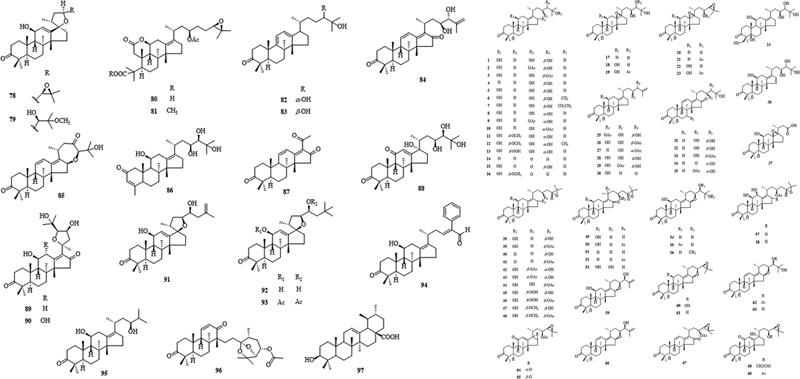
Modern phytochemical studies indicate that the primary active constituents of Zexie (Alismatis Rhizoma) are triterpenoids, most of which possess a protostane-type tetracyclic triterpene skeleton and exhibit broad pharmacological activities.[5] Research on triterpenoids from Zexie (Alismatis Rhizoma) dates back to 1960, when Kamiya et al[6] first determined the complete stereochemical structure of alisol A using X-ray crystallography, specifically resolving the configuration at the ring junctions, thereby providing a standard reference for the structural classification and identification of such compounds. In China, research on the chemical component of triterpenoid from Zexie (Alismatis Rhizoma) began in 1996, when Cai et al[7] isolated two triterpenoids, Alisol B monoacetate and Alisol C monoacetate, from the plant. Mai et al[8] discovered structurally diverse novel protostane-type triterpenes from Zexie (Alismatis Rhizoma), including ten regular protostanes, one 29-norprotostane, and one 24-norprotostane, with the 29-norprotostane-type triterpene providing a novel lead compound for the structural optimization of human carboxylesterase 2 (hCE2) inhibitors. Ma et al[9] systematically clarified the structural lineages of terpenoids in Zexie (Alismatis Rhizoma), identifying multiple rare skeleton derivatives (e.g., endoperoxide-bridged triterpenes, norprotostanes), thereby enriching the natural triterpenoid compound library. Li[10] isolated 10 protostane-type triterpenes from a 70% ethanol extract of Zexie (Alismatis Rhizoma) and found that triterpenoids were primarily distributed in the liver, muscle, and kidney tissues of rats, indicating these organs and tissues are major sites of action and accumulation for the pharmacologically active substances of Zexie (Alismatis Rhizoma), providing a basis for its clinical use. Triterpenoids from Zexie (Alismatis Rhizoma) are listed in [Table 1] and shown in [Fig. 1].
|
Number |
Name |
Reference |
Source |
|---|---|---|---|
|
1 |
Alisol A |
[49] |
a |
|
2 |
Alisol A 23-acetate |
[49] |
a |
|
3 |
Alisol A 24-acetate |
[50] |
a |
|
4 |
11-deoxyalisol A |
[50] |
a |
|
5 |
16-oxoalisol A |
[50] |
a |
|
6 |
25-O-methylalisol A |
[50] |
a |
|
7 |
25-O-ethylalisol A |
a |
|
|
8 |
Alisol E |
[51] |
a |
|
9 |
Alisol E 23-acetate |
[51] |
a |
|
10 |
Alisol E 24-acetate |
[52] |
a |
|
11 |
16β-methoxyalisol E |
[53] |
a |
|
12 |
16β,25-dimethoxyalisol E |
[54] |
a |
|
13 |
16β-hydroperoxyalisol E |
[54] |
a |
|
14 |
Alisol H |
a |
|
|
15 |
11,24-dihydlroxy-alsol H |
[10] |
a |
|
16 |
Alisol T |
[54] |
a |
|
17 |
11-deoxy-13β,17β-epoxyalisol A |
[50] |
a |
|
18 |
13β,17β-epoxyalisol A |
[50] |
a |
|
19 |
13β,17β-epoxyalisol A 24-acetate |
[52] |
a |
|
20 |
11-deoxy-13β,17β-epoxyalisol B |
a |
|
|
21 |
11-deoxy-13β,17β-epoxyalisol B 23-acetate |
a |
|
|
22 |
13β,17β-epoxyalisol B |
a |
|
|
23 |
Alisol D |
b |
|
|
24 |
5β,29-dihydroxy alisol A |
[58] |
a |
|
25 |
25-anhydroalisol A 11-acetate |
[59] |
a |
|
26 |
25-anhydroalisol A 24-acetate |
[59] |
a |
|
27 |
11-deoxy-25-anhydroalisol E |
[8] |
a |
|
28 |
Alisol G |
a |
|
|
29 |
Alisol G 23-acetate |
[53] |
a |
|
30 |
Alisol X |
[60] |
a |
|
31 |
3-oxo-16-oxo-11-anhydroalisol A |
[8] |
a |
|
32 |
16-oxo-11-anhydroalisol A |
a |
|
|
33 |
16-oxo-11-anhydroalisol A 24-acetate |
[9] |
a |
|
34 |
Alismanol A |
[8] |
a |
|
35 |
Alismanol C |
[8] |
a |
|
36 |
15,16-dihydroalisol A |
[8] |
a |
|
37 |
13β,17β-epoxy-24,25,26,27-tetranor-alisol A 23-oic acid |
[9] |
a |
|
38 |
Alisol B |
a |
|
|
39 |
Alisol B 23-acetate |
a |
|
|
40 |
11-deoxyalisol B |
[50] |
a |
|
41 |
11-deoxyalisol B 23-acetate |
[50] |
a |
|
42 |
16β-acetoxy alisol B |
[61] |
a |
|
43 |
16α-acetoxy alisol B |
[61] |
a |
|
44 |
16β-hydroxy-alisol B 23-acetate |
a,b |
|
|
45 |
16β-hydroperoxyalisol B |
[54] |
a |
|
46 |
16β-hydroperoxyalisol B 23-acetate |
[54] |
a |
|
47 |
16β-methoxyalisol B |
[54] |
a |
|
48 |
16β-methoxyalisol B 23-acetate |
[62] |
b |
|
49 |
Alisol C |
[50] |
a |
|
50 |
Alisol C 23-acetate |
[53] |
a |
|
51 |
11-deoxyalisol C |
[57] |
b |
|
52 |
11-deoxyalisol C 23-acetate |
[50] |
a |
|
53 |
20-hydroxyalisol C |
[8] |
a |
|
54 |
Alisol F |
[51] |
a |
|
55 |
Alisol F 24-acetate |
[56] |
a |
|
56 |
25-methoxyalisol F |
[54] |
a |
|
57 |
Alisol M 23-acetate |
[55] |
a |
|
58 |
Alisol N 23-acetate |
[55] |
a |
|
59 |
25-anhydro-alisol F |
a |
|
|
60 |
16,23-oxidoalisol B |
a |
|
|
61 |
Alisol I |
a |
|
|
62 |
Alisol O |
a |
|
|
63 |
24-deacetyl alisol O |
a |
|
|
64 |
Alisol J 23-acetate |
[55] |
a |
|
65 |
Alisol K 23-acetate |
[55] |
a |
|
66 |
11,25-anhydro-alisol F |
[66] |
a |
|
67 |
Alisol L 23-acetate |
[55] |
a |
|
68 |
Alisol Q 23-acetate |
[67] |
a |
|
69 |
Alisol S 23-acetate |
[54] |
a |
|
70 |
3-oxo-11β,23-dihydroxy-24,24-dimethyl-26,27-dinorprotost-13(17)-en-25-oic acid |
[68] |
a |
|
71 |
Alisol P |
[68] |
a |
|
72 |
Alisol R |
[54] |
a |
|
73 |
Alismaketone B 23-acetate |
[69] |
a |
|
74 |
Alisolide |
[68] |
a |
|
75 |
17-epi-alisolide A |
[70] |
a |
|
76 |
Alismaketone A 23-acetate |
[53] |
a |
|
77 |
Alismaketone C 23-acetate |
[69] |
a |
|
78 |
Alisol U |
[54] |
a |
|
79 |
Alisol V |
[54] |
a |
|
80 |
Alismalactone 23-acetate |
[53] |
a |
|
81 |
3-methylalismalactone 23-acetate |
[69] |
a |
|
82 |
Alismanol D |
[8] |
a |
|
83 |
24-epi alismanol D |
[70] |
a |
|
84 |
Alismanol B |
[8] |
a |
|
85 |
Alismanol E |
[8] |
a |
|
86 |
Alismanol F |
[8] |
a |
|
87 |
Alismanol G |
[8] |
a |
|
88 |
Alismanol M |
[71] |
a |
|
89 |
Alismanol O |
[71] |
a |
|
90 |
Alismanol P |
[71] |
a |
|
91 |
Alismanol Q |
[71] |
a |
|
92 |
Neoalisol |
[59] |
a |
|
93 |
Neoalisol 11,24-acetate |
[59] |
a |
|
94 |
Alismanin A |
[72] |
a |
|
95 |
Alismanin B |
[72] |
a |
|
96 |
Alismanin C |
[72] |
a |
|
97 |
Ursolic acid |
[73] |
a |
a Alisma plantago-aquatica.
b Alisma orientale.
Sesquiterpenoids
Sesquiterpenoids, along with triterpenoids, are major chemical constituents of Zexie (Alismatis Rhizoma), primarily featuring guaiane and eudesmane skeleton types. Research on sesquiterpenoids from Zexie (Alismatis Rhizoma) began in 1983 when Oshima et al[11] first isolated two sesquiterpenoids, 1β, 5β-guaia-6,10(15)-dien-4-ol and 4,10-epoxy-1β, 5β-guai-6-ene, from the plant. Liang et al[12] obtained nine sesquiterpenoids from Zexie (Alismatis Rhizoma): Orientalol L, orientalol M, orientalol N, orientalol O, orientalol P, alismanoid A, heyneanone D, leptocladol B, and chabrolidione B, and first reported the inhibitory effects of sesquiterpenoids on NO production in LPS-induced Caco-2 cells. Yu et al[13] first reported the presence of xanthane-type and salviolane-type sesquiterpenoids in the genus Alisma, significantly expanding the structural diversity of sesquiterpenoids within this genus and enriching the chemical profile of Alisma plants. To date, over 50 sesquiterpenoids have been isolated from Zexie (Alismatis Rhizoma). The names and structures of these compounds are listed in [Table 2] and shown in [Fig. 2].
|
Number |
Name |
Reference |
Source |
|---|---|---|---|
|
98 |
Alismoxide |
a,b |
|
|
99 |
10-O-methyl-alismoxide |
[50] |
a |
|
100 |
10-O-ethyl-alismoxide |
[76] |
a |
|
101 |
Orientalol A |
[74] |
a |
|
102 |
10-O-methyl-orientalol A |
[76] |
a |
|
103 |
Orientalol B |
a,b |
|
|
104 |
1αH,5αH-guaia-6-ene-4β,10β-diol |
[9] |
a |
|
105 |
Alismanoid C |
[77] |
a |
|
106 |
4α,10α-dihyroxy-5β-H-guaj-6-en |
[78] |
a |
|
107 |
10α-hydroxy-4α-methoxy-guai-6-ene |
[79] |
a |
|
108 |
4α,12-dihydroxyguaian-6,10-diene |
[61] |
a |
|
109 |
4β,1,2-dihydroxyguaian-6,10-dien |
a |
|
|
110 |
4-epi-alismoxide |
[76] |
a |
|
111 |
11-hydroxy-8-ox-alismoxide |
[61] |
a |
|
112 |
Alismorientols A |
[80] |
a |
|
113 |
Alismorientols B |
[80] |
a |
|
114 |
Alismol |
a,b |
|
|
115 |
11-oxo-13-noralismol |
a |
|
|
116 |
Ligucyperonol |
[61] |
a |
|
117 |
Orientalol C |
[74] |
a |
|
118 |
3β,4β-expoxy-chrysothol |
[76] |
a |
|
119 |
Orientalol E |
a |
|
|
120 |
Orientalol F |
[75] |
a |
|
121 |
Orientalol G |
[76] |
a |
|
122 |
Orientalol L |
[82] |
a |
|
123 |
7α,10α-epoxy-salvialan-10β-ol |
[13] |
b |
|
124 |
Orientalol N |
[82] |
a |
|
125 |
Alismanoid B |
[77] |
a |
|
126 |
Sulfoorientalols a |
[83] |
a |
|
127 |
Sulfoorientalols b |
[83] |
a |
|
128 |
Sulfoorientalols c |
[83] |
a |
|
129 |
Sulfoorientalols d |
[83] |
a |
|
130 |
Orientanone |
[84] |
a |
|
131 |
Clovandiol |
[78] |
a |
|
132 |
Germacrene C |
[85] |
a |
|
133 |
Germacrene D |
[85] |
a |
|
134 |
Gibberodione |
[13] |
b |
|
135 |
Oplopanone |
[13] |
b |
|
136 |
Entoplopanone |
[9] |
a |
|
137 |
1β,11-dihydroxy-β-cyperone |
[61] |
a |
|
138 |
1β-hydroxy-β-cyperone |
[61] |
a |
|
139 |
Eudesma-4(14)-ene-1β,6a-diol |
[50] |
a |
|
140 |
Orientalol O |
[82] |
a |
|
141 |
Orientalol P |
[82] |
a |
|
142 |
(10S)-11-hydroxy-β-cyperone |
[79] |
a |
|
143 |
Zingibertriol |
[79] |
a |
|
144 |
Alisguaiaone |
[13] |
a |
|
145 |
(8R)-alismanoid A |
[77] |
a |
|
146 |
(8S)-alismanoid A |
[77] |
a |
|
147 |
Litseachromolaevane B |
[79] |
a |
|
148 |
Orientalol M |
[82] |
a |
|
149 |
Heyneanones D |
[12] |
a |
|
150 |
Leptocladol B |
[12] |
a |
|
151 |
Chabrolidione B |
[12] |
a |
a Alisma plantago-aquatica.
b Alisma orientale.

Diterpenoids
Diterpenoids constitute a very minor fraction of the chemical constituents of Zexie (Alismatis Rhizoma), and few studies have been reported. Only four compounds, all of the kaurane-type tetracyclic diterpene class, have been documented. Their structures are listed in [Table 3] and shown in [Fig. 3].
|
Number |
Name |
Reference |
Source |
|---|---|---|---|
|
152 |
Oriediterpenone |
[86] |
a |
|
153 |
Oriediterpenonl |
[86] |
a |
|
154 |
Oriediterpenonside |
[86] |
a |
|
155 |
12-deoxyphorbol-13α-pentadecanoate |
[58] |
a |
a Alisma plantago-aquatica.
b Alisma orientale.

Other Constituents
Other constituents in Zexie (Alismatis Rhizoma) mainly include phenylpropanoids, phenolic acids, saccharides, and nitrogen-containing compounds. These compounds account for about one-third of the known compounds from Zexie (Alismatis Rhizoma), with phenylpropanoids and phenolic acids being chemical types isolated from the plant in recent years. These compounds are listed in [Table 4] and shown in [Fig. 4].
|
Number |
Name |
Reference |
Source |
|---|---|---|---|
|
156 |
Uracil |
[87] |
a |
|
157 |
Adenine |
[87] |
a |
|
158 |
Uridine |
[88] |
a |
|
159 |
Thymine |
[89] |
a |
|
160 |
N-(3′-maleimidyl)-5-hydroxymethyl-2-pyrrole formaldehyde |
[89] |
a |
|
161 |
Nicotinamide |
[90] |
a |
|
162 |
4-pyrazin-2-yl-but-3-ene-1,2-diol |
[90] |
a |
|
163 |
1H-indole-3-carboxylic acid |
[78] |
a |
|
164 |
Indazole |
[79] |
a |
|
165 |
Neoechinulin A |
[79] |
a |
|
166 |
Magnolamide |
[79] |
a |
|
167 |
Syringaresinol |
[79] |
a |
|
168 |
Pinoresinol |
[73] |
a |
|
169 |
Pinoresinol-4-O-β-D-glucoside |
[79] |
a |
|
170 |
Isoeucommin A |
[79] |
a |
|
171 |
(7,8-cis-8,8′-trans)-2,4-dihydroxy-3,5-dimethoxy-lariciresinol |
[79] |
a |
|
172 |
1-(4-hydroxy-3-methoxy phenyl)-propane-1,2,3-triol |
[79] |
a |
|
173 |
7-hydroxycoumarin |
[73] |
a |
|
174 |
N-trans-feruloyl-N′-cis-feruloyl-cadaverine |
[91] |
a |
|
175 |
N-trans-feruloyl-N′-cis-feruloyl-3-hydroxy-cadaverine |
[91] |
a |
|
176 |
N,N′-trans-diferuloyl-3-oxo-cadaverine |
[91] |
a |
|
177 |
N-trans-p-coumaroyl-N′-trans-feruloyl-3-hydroxy-cadaverine |
[91] |
a |
|
178 |
Diferuloyl-cadaverine |
[91] |
a |
|
179 |
N,N′-cis-diferuloyl-3-hydroxy-cadaverine |
[91] |
a |
|
180 |
N,N′-diferuloyl-putrescine |
[91] |
a |
|
181 |
(E,Z)-terrestribisamide |
[91] |
a |
|
182 |
(Z,Z)-terrestribisamide |
[91] |
a |
|
183 |
Alisman SI |
[92] |
a |
|
184 |
Alisman PII |
[93] |
a |
|
185 |
Manninotriose |
[94] |
a |
|
186 |
Verbascotetraose |
[94] |
a |
|
187 |
Verbascose |
a |
|
|
188 |
Raffinose |
[94] |
a |
|
189 |
Stachyose |
[94] |
a |
|
190 |
Saccharose |
[94] |
a |
|
191 |
β-D-fructofuranose |
[94] |
a |
|
192 |
5-hydroxymethylfuraldehyde |
[94] |
a |
|
193 |
α-D-fructofuranose |
[94] |
a |
|
194 |
Ethyl α-D-fructofuranoside |
[94] |
a |
|
195 |
Ethyl β-D-fructofuranoside |
[94] |
a |
|
196 |
β-sitosterol |
a |
|
|
197 |
β-sitosterol-3-O-6-stearyl glucoside |
[95] |
b |
|
198 |
β-sitosterol-3-O-6-stearate |
[7] |
a |
|
199 |
Ergosta-6,22-diene-3β,5α,8α-triol |
[73] |
a |
|
200 |
Daucosterol-6′-O-stearate |
a |
|
|
201 |
Daucosterol |
[88] |
a |
|
202 |
Amentoflavone |
[66] |
a |
|
203 |
Robustaflavone |
[66] |
a |
|
204 |
2,2′,4-trihydroxychalcone |
[66] |
a |
|
205 |
7,4′-dihydroxyisoflavone |
[73] |
a |
|
206 |
Calycosin |
[73] |
a |
|
207 |
Luteolin |
[73] |
a |
|
208 |
Apigenin |
[73] |
a |
|
209 |
Plantain A |
[96] |
a |
|
210 |
Ferulic acid |
[96] |
b |
|
211 |
Rynchopeterine A |
[96] |
b |
|
212 |
Rynchopeterine B |
[96] |
b |
|
213 |
Rosmarinic acid |
[96] |
b |
|
214 |
p-hydroxy benzaldehyde |
[73] |
a |
|
215 |
(Z)-8,11,12-trihydroxyoctadec-9-enoic acid |
[89] |
a |
|
216 |
2′,3′-dihydroxy propylentade canoate |
[89] |
a |
|
217 |
Butanedioic acid |
a |
|
|
218 |
Palmitin |
[90] |
a |
|
219 |
1-monolinolein |
[90] |
a |
|
220 |
n-tricosane |
[7] |
a |
|
221 |
Ethyl octadecanoate |
[73] |
a |
|
222 |
Methyl palmitate |
[73] |
a |
|
223 |
1-behenyl alcohol |
[88] |
a |
|
224 |
Dulcitol |
[88] |
a |
|
225 |
Stearic acid |
a |
|
|
226 |
1-glyceryl stearate |
[7] |
a |
|
227 |
Rheum emodin |
[7] |
a |
a Alisma plantago-aquatica.
b Alisma orientale.

Pharmacological Effects
Studies have shown that crude extracts and monomeric compounds from Zexie (Alismatis Rhizoma) possess various pharmacological effects, including diuretic, antiurolithiasis, renal protective, hypoglycemic, hypolipidemic, and anti-inflammatory activities, as well as the ability to activate the Farnesoid X receptor and inhibit carboxylesterases. Among these, its diuretic, antiurolithiasis, and hypolipidemic effects have been more intensively studied.[14]
Diuretic Effect
Zexie (Alismatis Rhizoma) has the effect of promoting diuresis and excreting dampness, and its diuretic activity has been relatively well-studied. Tao et al[15] established a reliable UHPLC-MS/MS analytical method to track active components in Chinese medicinal and used this method to identify three diuretic components from Zexie (Alismatis Rhizoma): Alisol A, alisol B, and alisol F. Zhang et al[16] evaluated the diuretic effect of total triterpenoids from Zexie (Alismatis Rhizoma) and found that they significantly increased urine volume and promoted electrolyte excretion in saline-loaded rats. Furthermore, alisol A, 24-acetylalisol A, alisol B, 23-acetylalisol B, and 23-acetylalisol C shared the same diuretic mechanism as the total triterpenoids, suggesting that triterpenoids could be developed as potential diuretic agents. Additionally, studies indicate that a 95% ethanol extract of Zexie (Alismatis Rhizoma) has a dual effect on rat kidney function, acting as a diuretic at low doses and exhibiting an antidiuretic effect at high doses.[17]
An aqueous extract of Zexie (Alismatis Rhizoma) can significantly reduce AQP2 mRNA expression in the rat renal medulla, thereby increasing urine volume.[18] In clinical studies, the aqueous extract of Zexie (Alismatis Rhizoma) significantly increased urine output in patients with cirrhotic portal hypertension, a mechanism potentially related to the Na+–Cl− cotransporter in the distal renal vasculature.[19] [20]
Antiurolithiasis and Renal Protective Effects
Qu et al[21] found that the total triterpenoid extract of Zexie (Alismatis Rhizoma) reversed changes in serum urea nitrogen, creatinine, and urinary calcium in rats with ethylene glycol and alfacalcidol-induced urinary calcium oxalate stones. It also reduced the number and size of deposited calcium oxalate crystals, protecting the kidney from severe damage, further indicating that total triterpenoids are the active components responsible for the antiurolithiasis effect of Zexie (Alismatis Rhizoma). Cao et al[22] discovered that active components of Zexie (Alismatis Rhizoma) could inhibit renal stone formation by downregulating the expression of bikunin mRNA in rat kidneys, thereby reducing calcium oxalate formation. A 50% methanol extract of Zexie (Alismatis Rhizoma) significantly reduced calcium ion content in rat renal tissue, demonstrating significant antiurolithiasis activity.[23] The ethyl acetate eluate of an ethyl acetate extract of Zexie (Alismatis Rhizoma) exerted antiurolithiasis effects by reducing calcium oxalate crystal deposition in renal tissue and the expression of IαI in renal tubular epithelial cells.[24] Furthermore, a 95% ethanol extract of Zexie (Alismatis Rhizoma) protected mouse kidney by improving the activity of renal antioxidant enzymes and inhibiting lipid peroxidation.[25] Studies have shown that an aqueous extract of Zexie (Alismatis Rhizoma) also significantly inhibits the growth and aggregation of calcium oxalate, thereby inhibiting renal stone formation.[26] [27] Cao et al[28] found that Zexie (Alismatis Rhizoma) assists in stone expulsion through a triple mechanism involving diuresis, crystallization inhibition, and anti-inflammatory action, supported by substantial clinical evidence and a high safety profile. Its effective components are primarily triterpenoids, and its efficacy can be further enhanced when combined with Jinqiancao (Lysimachiae Herba) or potassium citrate.
Hypolipidemic Effect
Zexie (Alismatis Rhizoma) has the effect of resolving turbidity and lowering lipids, and is commonly used clinically to treat fatty liver disease and hyperlipidemia. Miao et al found that Zexie (Alismatis Rhizoma) ameliorated disorders of amino acid, purine, pyrimidine, and energy metabolism induced by a high-fat diet, and identified 19 biomarkers related to hyperlipidemia and antihyperlipidemia effects.[29] Dan et al found that Zexie (Alismatis Rhizoma) significantly reduced levels of ALT, AST, hepatic cholesterol, triglycerides, and HDL-cholesterol, and identified 23-acetylalisol B and 24-acetylalisol A as the main active components responsible for its hypolipidemic effects.[30] Studies have shown that 24-acetylalisol A exerts hypolipidemic effects by inhibiting HMG-CoA reductase activity, thereby reducing total cholesterol, LDL-cholesterol, and triglyceride levels in hyperlipidemic mice.[31] An ethanol extract of Zexie (Alismatis Rhizoma) can reduce acetyl-CoA, a substrate for cholesterol synthesis, and decrease hepatic lipid accumulation.[32] [33] Studies have shown that a water decoction of Zexie (Alismatis Rhizoma) improves hepatic lipid deposition and reduces palmitic acid-induced steatosis and injury in HepG2 cells modeling non-alcoholic fatty liver disease.[34]
Hepatoprotective Effects
An ethanol extract of Zexie (Alismatis Rhizoma) can effectively regulate disorders of blood lipid metabolism, inhibit hepatic lipid deposition, promote liver regeneration in partially hepatectomized mice, and alleviate carbon tetrachloride-induced hepatotoxicity in mice.[35] [36] [37] Furthermore, polysaccharides from Zexie (Alismatis Rhizoma) also exhibit a certain protective effect against carbon tetrachloride-induced acute liver injury in mice.[38] Luan et al[39] found that (23S)-11β, 23-dihydroxy-8α, 9β, 14β-dammar-13(17)-ene-3, 24-dione from Zexie (Alismatis Rhizoma) modulated the mRNA expression levels of FXR, UGT2B4, BSEP, SHP1, and FXR downstream proteins, thereby exerting a protective effect against non-alcoholic fatty liver disease. Using luciferase reporter assays, siRNA experiments, and further molecular docking studies, Meng et al demonstrated that 23-acetylalisol B protects against cholestasis and anti-inflammatory drug-induced hepatotoxicity by activating farnesoid X receptor (FXR).[40] [41]
Anti-Inflammatory Effects
Modern pharmacological studies indicate that conditions such as hyperlipidemia, hypertension, and hyperglycemia are closely related to inflammatory factors.[42] Network pharmacology research by some scholars suggests that Zexie (Alismatis Rhizoma) may exert its anti-inflammatory effects by modulating the PI3K-AKT and ErbB signaling pathways.[43] Liang et al isolated eight protostane-type triterpenoids from Zexie (Alismatis Rhizoma), all of which significantly inhibited NO production in LPS-induced Caco-2 cells, with alisol A 23-acetate and alisol G showing the strongest inhibitory activity.[37] Additionally, studies show that Zexie Tang (Alisma Decoction) and total triterpenoids from Zexie (Alismatis Rhizoma) exert anti-inflammatory effects by downregulating the mRNA expression of inflammatory mediators such as IL-1β and IL-6.[44] [45]
Other Pharmacological Effects
Studies indicate that the monomeric compound 23-acetylalisol B from Zexie (Alismatis Rhizoma) exerts anticancer effects by inducing apoptosis and autophagy in A549 and NCI-H292 cells.[46] Triterpenoids from Zexie (Alismatis Rhizoma) exhibit inhibitory effects against Enterococcus faecium and Pseudomonas aeruginosa, and both triterpenoids and sesquiterpenoids from Zexie (Alismatis Rhizoma) can inhibit Bacillus subtilis and Staphylococcus aureus.[42] An ethanol extract of Zexie (Alismatis Rhizoma) can inhibit α-glucosidase activity, while an aqueous extract can inhibit intestinal glucose absorption and accelerate gluconeogenesis, thereby exerting hypoglycemic effects.[4] Zhu et al found that triterpenoids such as alisol C and alisol L in the aqueous extract of Zexie (Alismatis Rhizoma) possess hypoglycemic activity, potentially related to the activation of Nrf2 gene expression.[47] Investigation of Zexie (Alismatis Rhizoma) residue (dregs) revealed a high content of 23-acetylalisol B, and the concentration of its ethanol extract showed a positive correlation with 2,2-diphenyl-1-picrylhydrazyl (DPPH) and 2,2’-azino-bis(3-ethylbenzothiazoline-6-sulfonic acid) (ABTS) free radical scavenging activities, indicating that the residue possesses good antioxidant activity.[48]
Conclusion
Zexie (Alismatis Rhizoma), used in TCM clinical practice as a diuretic and dampness-eliminating medicinal, is commonly indicated for dysuria, edema and distension, diarrhea with oliguria, and dizziness due to phlegm–fluid retention. Systematic phytochemical studies reveal that Zexie (Alismatis Rhizoma) is rich in various structural types of constituents, including triterpenoids, sesquiterpenoids, polysaccharides, sterols, alkaloids, phenolic acids, and lignans. Research has identified protostane-type tetracyclic triterpenoids and polysaccharides as its core active components and established a “component–target–pharmacological effect” correlation framework: Triterpenoids primarily mediate diuretic, hepatorenal protective, and anti-inflammatory effects, while polysaccharides primarily contribute to hypolipidemic effects and improvement of insulin resistance, fully corroborating its traditional efficacy of “promoting diuresis and excreting dampness.” Although progress has been made, current pharmacological research on Zexie (Alismatis Rhizoma) often focuses on crude extracts, with fewer studies on the pharmacological activities of monomeric chemical constituents. Furthermore, research on A. orientale remains relatively limited. Future efforts should strengthen the study of the chemical constituents of A. orientale to provide a reference for the material basis, processing methods, and quality evaluation of Zexie (Alismatis Rhizoma).
Conflict of Interest
The authors declare no conflict of interest.
CRediT Authorship Contribution Statement
Wanbing Shang: Investigation and writing—original draft. Haoyue Yuan: Investigation. Linlin Li: Investigation. Bian Wang: Conceptualization, writing-review & editing, and funding acquisition.
-
References
- 1 Chinese Pharmacopoeia Commission. Pharmacopoeia of the People's Republic of China: 2020 Edition Volume I. Beijing: China Medical Science Press; 2020: 239-240
- 2 Wang YH, Zhao JC, Weng QQ. et al. Herbal textual research on Alismatis Rhizoma in famous classical formulas. Chin J Exp Tradit Med Formula 2022; 28 (10) 229-237
- 3 Jin LY, Wang YJ, Li CY. et al. Textual research on origin of Alismatis Rhizoma in Chinese Pharmacopoeia. Chin J Exp Tradit Med Formula 2020; 26 (15) 177-182
- 4 Liu SS, Guo J, Li ZA. et al. Advances in studies on chemical compositions of Alismatis Rhizoma and their biological activities. Zhongguo Zhongyao Zazhi 2020; 45 (07) 1578-1595
- 5 Wang P, Song T, Shi R. et al. Triterpenoids from Alisma species: phytochemistry, structure modification, and bioactivities. Front Chem 2020; 8: 363
- 6 Kamiya K, Murata T, Nishikawa M. Biological-active triterpenes of Alismatis Rhizoma. III. The X-ray crystallography of alisol A (23, 24)-acetonide 11-monobromoacetate. Chem Pharm Bull (Tokyo) 1970; 18 (07) 1362-1368
- 7 Cai LN, Wang HS, Cao HX. et al. Study on chemical constituents of Alisma orientalis. Nat Prod Res Dev 1996; 8 (01) 5-9
- 8 Mai ZP, Zhou K, Ge GB. et al. Protostane triterpenoids from the rhizome of Alisma orientale exhibit inhibitory effects on human carboxylesterase 2. J Nat Prod 2015; 78 (10) 2372-2380
- 9 Ma Q, Han L, Bi X. et al. Structures and biological activities of the triterpenoids and sesquiterpenoids from Alisma orientale. Phytochemistry 2016; 131: 150-157
- 10 Li Q. Study on Active Components in Nauclea officinalis . Basis of Nauclea officinalis and Alisma orientale . Hangzhou: Zhejiang University; 2013
- 11 Oshima Y, Iwakawa T, Hikino H. Alismol and alismoxide, sesquiterpenoids of Alisma rhizomes. Phytochemistry 1983; 22 (01) 183-185
- 12 Liang ZW, Zhang JQ, Yang L. et al. Isolation of protostane triterpenoids, nor-triterpenoids and sesquiterpenes from rhizoma alismatis and their anti-inflammatory activities research. Mod Tradit Chin Med Mater Med-World Sci Technol 2021; 23 (12) 4613-4621
- 13 Yu JY, Wang J, Liang H. et al. Sesquiterpenes from Alisma plantago-aquatica . J Chin Pharm Sci 2016; 25 (08) 614-620
- 14 Feng L, Liu TT, Huo XK. et al. Alisma genus: Phytochemical constituents, biosynthesis, and biological activities. Phytother Res 2021; 35 (04) 1872-1886
- 15 Tao Y, Jiang E, Yan J, Cai B. A biochemometrics strategy for tracing diuretic components of crude and processed Alisma orientale based on quantitative determination and pharmacological evaluation. Biomed Chromatogr 2020; 34 (02) e4744
- 16 Zhang X, Li XY, Lin N. et al. Diuretic activity of compatible triterpene components of Alismatis Rhizoma. Molecules 2017; 22 (09) 1459
- 17 Chen DQ, Feng YL, Tian T. et al. Diuretic and anti-diuretic activities of fractions of Alismatis Rhizoma. J Ethnopharmacol 2014; 157: 114-118
- 18 Wu XY, Chen C, Zhang GW. Effects of aqueous extract of Rhizoma Alismastis on diuretic activity and kidney medulla AQP2 expression in normal rats. J Clin Med Pract 2010; 14 (21) 5-7
- 19 Liu SL, Feng ZJ, Lv YC. et al. Clinical study on the effect of Alisma orientalis on hemodynamics in cirrhotic portal hypertension. J Chin Hepatol 2006; 22 (02) 119-120
- 20 Feng YL, Chen H, Tian T, Chen DQ, Zhao YY, Lin RC. Diuretic and anti-diuretic activities of the ethanol and aqueous extracts of Alismatis Rhizoma. J Ethnopharmacol 2014; 154 (02) 386-390
- 21 Qu SY, Peng KL, Su Q. et al. Effect of total triterpenoid extract from Alisma orientalis on calcium oxalate stone formation in rat urinary system. Acta Medicinae Universitatis Scientiae et Technologiae Huazhong 2011; 40 (06) 634-639
- 22 Cao ZG, Liu JH, Zhou SW. et al. Effect of active constituents from Alisma orientalis on renal stone formation and bikunin expression in stone model rats. Natl Med J Chin 2004; 84 (15) 1276-1279
- 23 Li HY, Liu JH, Cao ZG. et al. An in vitro and in vivo study of water and lipid soluble extracts from Alisma orientalis on urinary oxalate calcium stone formation. Chin J Urol 2003; (10) 658-662
- 24 Cao ZG, Liu JH, Zhou SW. et al. Effect of Alisma orientalis extract on renal stone formation and the expression of inter-alpha-trypsin inhibitor in rat urolithiasis model. Chin J Exp Surg 2004; (03) 295-297
- 25 Zhou SY, Zhou YD, Du GH. Protective effect of extracts from Radix et Rhizoma Rhei and Alisma orientalis against acute kidney injury induced by diethylene glycol. Chin Pharm 2009; 20 (09) 641-643
- 26 Utsunomiya M, Koide T, Yamaguchi S, Yoshioka T, Sonoda T, Sugiyama K. The effect of kanpou medicine on the growth and aggregation of calcium oxalate crystals in vitro. Hinyokika Kiyo 1991; 37 (10) 1097-1101
- 27 Kawamura K, Moriyama M, Nakajima C, Miyazawa K, Suzuki K, Tsugawa R. The inhibitory effects of Takusha on the formation, growth and aggregation of calcium oxalate crystals in vitro. Hinyokika Kiyo 1993; 39 (08) 695-700
- 28 Cao ZG, Su H, Zhu YP. et al. Adjuvant expulsive effect of Chinese medicine Alisma orientalis on upper urinary tract stones. Acta Univ Med Anhui 2008; 43 (05) 573-575
- 29 Miao H, Zhang L, Chen DQ, Chen H, Zhao YY, Ma SC. Urinary biomarker and treatment mechanism of Rhizoma Alismatis on hyperlipidemia. Biomed Chromatogr 2017; 31 (04) e3829
- 30 Dan H, Wu J, Peng M. et al. Hypolipidemic effects of Alismatis rhizome on lipid profile in mice fed high-fat diet. Saudi Med J 2011; 32 (07) 701-707
- 31 Xu F, Yu H, Lu C, Chen J, Gu W. The cholesterol-lowering effect of alisol acetates based on HMG-CoA reductase and its molecular mechanism. Evid Based Complement Alternat Med 2016; 2016: 4753852-4753852
- 32 Jin HZ, Jiang QZ, Jin CT. et al. Study on the mechanism of cholesterol-lowering Chinese medicines. Paper presented at: Abstracts of the World Congress on Integrative Medicine; 1997: 373
- 33 Park YJ, Kim MS, Kim HR. et al. Ethanol extract of alismatis rhizome inhibits adipocyte differentiation of OP9 cells. Evid Based Complement Alternat Med 2014; 2014: 415097
- 34 Han CW, Kang ES, Ham SA, Woo HJ, Lee JH, Seo HG. Antioxidative effects of Alisma orientale extract in palmitate-induced cellular injury. Pharm Biol 2012; 50 (10) 1281-1288
- 35 Hong XZ. Research of the Efficacy and the Mechanism of the Alisma orientalis Methanolic Extract on Nonalcoholic Fatty Liver Disease. Hangzhou: Zhejiang University; 2006
- 36 Huo XK, Liu J, Yu ZL. et al. Alisma orientale extract exerts the reversing cholestasis effect by activation of farnesoid X receptor. Phytomedicine 2018; 42 (15) 34-42
- 37 Meng Q. Liver protective effects and pharmacological mechanisms of alisol B 23-acetate. Dalian: Dalian Medical University; 2015
- 38 Huang XQ, Zhang X, Xiong LY. et al. Protective effect of Alisma orientalis polysaccharides on carbon tetrachloride-induced acute liver injury in mice. J Li-shizhen Zhong Yi Xue 2017; 28 (06) 1300-1302
- 39 Luan ZL, Huo XK, Dong PP. et al. Highly potent non-steroidal FXR agonists protostane-type triterpenoids: Structure-activity relationship and mechanism. Eur J Med Chem 2019; 182: 111652
- 40 Meng Q, Chen X, Wang C. et al. Alisol B 23-acetate promotes liver regeneration in mice after partial hepatectomy via activating farnesoid X receptor. Biochem Pharmacol 2014; 92 (02) 289-298
- 41 Meng Q, Chen XL, Wang CY. et al. Alisol B 23-acetate protects against ANIT-induced hepatotoxity and cholestasis, due to FXR-mediated regulation of transporters and enzymes involved in bile acid homeostasis. Toxicol Appl Pharmacol 2015; 283 (03) 178-186
- 42 Dai MX, Jin SN, Song CW. et al. Research progress on chemical constituents and pharmacological effects of Alisma Rhizoma and its processed products. Chin Tradit Herbal Drugs 2023; 54 (05) 1620-1635
- 43 Miao XD, Li CT. Study the molecular mechanism of anti-inflammatory effects of Rhizoma Alismatis based on network pharmacology-molecular socking. Pract Clin J Integr Tradit Chin West Med 2023; 23 (16) 1-5
- 44 Lin GC, Chen YH, Yang LH. et al. Effects of different compatibility ratio of alisma decoction on blood lipid metabolism and macrophage TNF-α and IL-6 in hyperlipidemic rats. Chin Health Standard Manage 2018; 9 (19) 112-114
- 45 Lin N, Huang JF, Zhang X. et al. Anti-inflammatory activity of total triterpenes from Alisma Orie. Fujian J Tradit Chin Med 2018; 49 (04) 68-69
- 46 Wang J, Li H, Wang X, Shen T, Wang S, Ren D. Alisol B-23-acetate, a tetracyclic triterpenoid isolated from Alisma orientale, induces apoptosis in human lung cancer cells via the mitochondrial pathway. J Biochem Biophys Res Commun 2018; 505 (04) 1015-1021
- 47 Zhu HC, Tao MJ, Yang YL. et al. Study on the chemical constituents of water extract from Alisma orientale . J Pharm Res 2020; 39 (11) 621-627
- 48 Liang SY, Liu QQ, Huang S. et al. Determination of four active components in Liuwei Dihuang Pill residue and its antioxidant activity. J Hunan Univ Chin Med 2021; 41 (05) 707-713
- 49 Murata T, Imai Y, Hirata T, Miyamoto M. Biological-active trieterpenes of Alismatis rhizoma. I. Isolation of the alisols. Chem Pharm Bull (Tokyo) 1970; 18 (07) 1347-1353
- 50 Nakajima Y, Satoh Y, Katsumata M. et al. Terpenoids of Alisma orientale rhizome and the crude drug alismatis rhizoma. Phytochemistry 1994; 36 (01) 119-127
- 51 Yoshikawa M, Hatakeyama S, Tanaka N. et al. Crude drugs from aquatic plants. I. on the constituents of Alismatis Rhizoma. (1). Absolute stereostructures of alisols E 23-acetate, F, and G, three new protostane-type triterpenes from Chinese Alismatis Rhizoma. Chem Pharm Bull (Tokyo) 1993; 41 (11) 1948-1954
- 52 Peng GP, Zhu GY, Lou FC. Studies on triterpenoids from Alisma orientalis III. Nat Prod Res Dev 2002; 14 (06) 7-10
- 53 Yoshikawa M, Murakami T, Ikebata A. et al. Absolute stereostructures of alismalactone 23-acetate and alismaketone-a 23-acetate, new seco-protostane and protostane-type triterpenes with vasorelaxant effects from Chinese Alismatis Rhizoma. Chem Pharm Bull (Tokyo) 1997; 45 (04) 756-758
- 54 Li HM, Chen XJ, Luo D. et al. Protostane-type triterpenoids from Alisma orientale . Chem Biodivers 2017; 14 (12) e1700452
- 55 Yoshikawa M, Tomohiro N, Murakami T. et al. Studies on Alismatis Rhizoma. III. Stereostructures of new protostane-type triterpenes, alisols H, I, J-23-acetate, K-23-acetate, L-23-acetate, M-23-acetate, and N-23-acetate, from the dried rhizome of Alisma orientale . Chem Pharm Bull (Tokyo) 1999; 47 (04) 524-528
- 56 Peng GP, Lou FC. Studies on triterpenoids from Alisma orientalis produced in Sichuan. Nat Prod Res Dev 2001; 13 (04) 1-4
- 57 Fukuyama Y, Pei-Wu G, Rei W, Yamada T, Nakagawa K. 11-deoxyalisol C and alisol D: New protostane-type triterpenoids from Alisma plantago-aquatica . Planta Med 1988; 54 (05) 445-447
- 58 Wang YL, Zhao JC, Liang JH. et al. A bioactive new protostane-type triterpenoid from Alisma plantago-aquatica subsp. orientale (Sam.) Sam. Nat Prod Res 2019; 33 (06) 776-781
- 59 Peng GP, Zhu GY, Lou FC. Two novel terpenoids from Alisma Orientalis Juzep. Nat Prod Res Dev 2002; 14 (04) 5-8
- 60 Xu N, Zhang HD, Xie X. A new triterpene in rhizome of Alisma orientale . Chin Tradit Herbal Drugs 2012; 43 (05) 841-843
- 61 Cang J, Wang C, Huo XK. et al. Sesquiterpenes and triterpenoids from the rhizomes of Alisma orientalis and their pancreatic lipase inhibitory activities. Phytochem Lett 2017; 19: 83-88
- 62 Geng PW, Yoshiyasu F, Toshihide Y. et al. Triterpenoids from the rhizome of Alisma plantago-aquatica . Phytochemistry 1988; 27 (04) 1161-1164
- 63 Hu XY, Guo YQ, Gao WY, Zhang TJ, Chen HX. Two new triterpenes from the rhizomes of Alisma orientalis. J Asian Nat Prod Res 2008; 10 (5-6): 481-484
- 64 Jiang ZY, Zhang XM, Zhang FX. et al. A new triterpene and anti-hepatitis B virus active compounds from Alisma orientalis. Planta Med 2006; 72 (10) 951-954
- 65 Zhou AC, Zhang CF, Zhang M. A new protostane triterpenoid from the rhizome of Alisma Orientale. Chin J Nat Med 2008; (02) 109-111
- 66 Hu XY, Guo YQ, Gao WY. et al. A new triterpenoid from Alisma orientalis. Chin Chem Lett 2008; 19 (04) 438-440
- 67 Jin HG, Jin Q, Ryun Kim A. et al. A new triterpenoid from Alisma orientale and their antibacterial effect. Arch Pharm Res 2012; 35 (11) 1919-1926
- 68 Zhao M, Xu LJ, Che CT. Alisolide, alisols O and P from the rhizome of Alisma orientale . Phytochemistry 2008; 69 (02) 527-532
- 69 Matsuda H, Kageura T, Toguchida I, Murakami T, Kishi A, Yoshikawa M. Effects of sesquiterpenes and triterpenes from the rhizome of Alisma orientale on nitric oxide production in lipopolysaccharide-activated macrophages: Absolute stereostructures of alismaketones-B 23-acetate and -C 23-acetate. Bioorg Med Chem Lett 1999; 9 (21) 3081-3086
- 70 Xin XL, Zhao XY, Huo XK. et al. Two new protostane-type triterpenoids from Alisma orientalis. Nat Prod Res 2018; 32 (02) 189-194
- 71 Xin XL, Mai ZP, Wang X. et al. Protostane alisol derivatives from the rhizome of Alisma orientale. Phytochem Lett 2016; 16: 8-11
- 72 Wang C, Huo XK, Luan ZL. et al. Alismanin A, a triterpenoid with a C (34) skeleton from Alisma orientale as a natural agonist of human pregnane X receptor. Org Lett 2017; 19 (20) 5645-5648
- 73 Qiu DF. Studies on the chemical constituents from Alisma orientalis. Lanzhou: Lanzhou University; 2009
- 74 Yoshikawa M, Hataketama S, Tanaka N. et al. Orientalol-A, orientalol-B, and orientalol-C, sesquiterpene constituents from Chinese Alismatis Rhizoma, and revised structures of alismol and alismoxide. Chem Pharm Bull (Tokyo) 1992; 40 (09) 2582-2584
- 75 Peng GP, Tian G, Huang XF, Lou FC. Guaiane-type sesquiterpenoids from Alisma orientalis. Phytochemistry 2003; 63 (08) 877-881
- 76 Li HM, Fan M, Xue Y. et al. Guaiane-type sesquiterpenoids from Alismatis Rhizoma and their anti-inflammatory activity. Chem Pharm Bull (Tokyo) 2017; 65 (04) 403-407
- 77 Yu ZL, Peng YL, Wang C. et al. Alismanoid A, an unprecedented 1,2-seco bisabolene from Alisma orientale, and its protective activity against H2O2-induced damage in SH-SY5Y cells. New J Chem 2017; 41 (21) 12664-12670
- 78 Zhang CF, Zhou AC, Zhang M. Chemical constituents from Alismatis Rhizoma and screening for their immunosuppressive activity. Chin J Chin Mater Med 2009; 34 (08) 994-998
- 79 Zhao XY, Wang G, Wang Y. et al. Chemical constituents from Alisma plantago-aquatica subsp. orientale (Sam.) Sam and their anti-inflammatory and antioxidant activities. Nat Prod Res 2018; 32 (23) 2749-2755
- 80 Jiang ZY, Zhang XM, Zhou J. et al. Two new sesquiterpenes from Alisma orientalis. Chem Pharm Bull (Tokyo) 2007; 55 (06) 905-907
- 81 Peng GP, Lou FC. Studies on the chemical constituents of Alisma orientalis. Nat Prod Res Dev 2001; 13 (03) 1-3
- 82 Zhang JQ, Jin QH, Li SY. et al. Orientalol L–P, novel sesquiterpenes from the rhizome of Alisma orientale (Sam.) Juzep and their nephrotoxicity on HK2 cells. New J Chem 2018; 42 (16) 13414-13420
- 83 Yoshikawa M, Fukuda Y, Hatakeyama S. et al. Sulfoorientalols a, b, c, and d, four new biologically active sesquiterpenes from Alismatis rhizoma. J Chem Pharm Bull (Tokyo) 1993; 41 (06) 1194-1196
- 84 Peng GP, Luo FC, Huang XF. et al. Structure of orientanone from Alisma orientalis, a novel sesquiterpene originating from guaiane-type carbon skeleton by isopropyl shift. Tetrahedron 2002; 58 (44) 9045-9048
- 85 Yoshikawa M, Yamaguchi S, Matsuda H, Tanaka N, Yamahara J, Murakami N. Crude drugs from aquatic plants. V. On the constituents of alismatis rhizoma. (3). Stereostructures of water-soluble bioactive sesquiterpenes, sulfoorientalols a, b, c, and d, from Chinese alismatis rhizoma. Chem Pharm Bull (Tokyo) 1994; 42 (12) 2430-2435
- 86 Peng GP, Lou FC. Isolation and identification of diterpenes from alisma orientalis juzep. Yao Xue Xue Bao 2002; 37 (12) 950-954
- 87 Lu YM. Study on the Separation of Hypoglycemic Constituents from Alisma orientalis by Chromatography. Nanchang: Nanchang University; 2014
- 88 Peng X, Tan L, Yao B. et al. Studies on the constituents from the rhizome of Ailsma orientalis. J Chin Pharm Sci 1999; 8 (03) 173-174
- 89 Zhang Y. Study on Chemical Constituents and Biological Activities of Two Medicinal Plants. Ji'nan: Shandong University; 2015
- 90 Hong CQ, Piao XL, Lou CX. Isolation and identification of chemical constituents from Alisma orientale. J Chongqing Inst Technol 2008; 22 (04) 78-81 (Nat Sci Ed)
- 91 Xin XL, Yu ZL, Tian XG. et al. Phenylpropanoid amides from Alisma orientalis and their protective effects against H2O2-induced damage in SH-SY5Y cells. Phytochem Lett 2017; 21: 46-50
- 92 Shimizu N, Ohtsu S, Tomoda M, Gonda R, Ohara N. A glucan with immunological activities from the tuber of Alisma orientale . Biol Pharm Bull 1994; 17 (12) 1666-1668
- 93 Tomoda M, Gonda R, Shimizu N, Ohara N. Characterization of an acidic polysaccharide having immunological activities from the tuber of Alisma orientale . Biol Pharm Bull 1994; 17 (05) 572-576
- 94 Zhang Z, Wang D, Zhao Y, Gao H, Hu YH, Hu JF. Fructose-derived carbohydrates from Alisma orientalis. Nat Prod Res 2009; 23 (11) 1013-1020
- 95 Geng PW, Yoshiyasu F, Wang R. et al. An acylated sitosterol glucoside from Alisma plantago-aquatica . Phytochemistry 1988; 27 (06) 1895-1896
- 96 Huang YS, Yu QQ, Chen Y, Cheng MJ, Xie LP. Phenolic constituents from Alisma plantago-aquatica Linnaeus and their anti-chronic prostatitis activity. Chem Cent J 2017; 11 (01) 120
Address for correspondence
Publication History
Received: 29 July 2025
Accepted: 22 September 2025
Article published online:
30 December 2025
© 2025. The Author(s). This is an open access article published by Thieme under the terms of the Creative Commons Attribution License, permitting unrestricted use, distribution, and reproduction so long as the original work is properly cited. (https://creativecommons.org/licenses/by/4.0/)
Georg Thieme Verlag KG
Oswald-Hesse-Straße 50, 70469 Stuttgart, Germany
-
References
- 1 Chinese Pharmacopoeia Commission. Pharmacopoeia of the People's Republic of China: 2020 Edition Volume I. Beijing: China Medical Science Press; 2020: 239-240
- 2 Wang YH, Zhao JC, Weng QQ. et al. Herbal textual research on Alismatis Rhizoma in famous classical formulas. Chin J Exp Tradit Med Formula 2022; 28 (10) 229-237
- 3 Jin LY, Wang YJ, Li CY. et al. Textual research on origin of Alismatis Rhizoma in Chinese Pharmacopoeia. Chin J Exp Tradit Med Formula 2020; 26 (15) 177-182
- 4 Liu SS, Guo J, Li ZA. et al. Advances in studies on chemical compositions of Alismatis Rhizoma and their biological activities. Zhongguo Zhongyao Zazhi 2020; 45 (07) 1578-1595
- 5 Wang P, Song T, Shi R. et al. Triterpenoids from Alisma species: phytochemistry, structure modification, and bioactivities. Front Chem 2020; 8: 363
- 6 Kamiya K, Murata T, Nishikawa M. Biological-active triterpenes of Alismatis Rhizoma. III. The X-ray crystallography of alisol A (23, 24)-acetonide 11-monobromoacetate. Chem Pharm Bull (Tokyo) 1970; 18 (07) 1362-1368
- 7 Cai LN, Wang HS, Cao HX. et al. Study on chemical constituents of Alisma orientalis. Nat Prod Res Dev 1996; 8 (01) 5-9
- 8 Mai ZP, Zhou K, Ge GB. et al. Protostane triterpenoids from the rhizome of Alisma orientale exhibit inhibitory effects on human carboxylesterase 2. J Nat Prod 2015; 78 (10) 2372-2380
- 9 Ma Q, Han L, Bi X. et al. Structures and biological activities of the triterpenoids and sesquiterpenoids from Alisma orientale. Phytochemistry 2016; 131: 150-157
- 10 Li Q. Study on Active Components in Nauclea officinalis . Basis of Nauclea officinalis and Alisma orientale . Hangzhou: Zhejiang University; 2013
- 11 Oshima Y, Iwakawa T, Hikino H. Alismol and alismoxide, sesquiterpenoids of Alisma rhizomes. Phytochemistry 1983; 22 (01) 183-185
- 12 Liang ZW, Zhang JQ, Yang L. et al. Isolation of protostane triterpenoids, nor-triterpenoids and sesquiterpenes from rhizoma alismatis and their anti-inflammatory activities research. Mod Tradit Chin Med Mater Med-World Sci Technol 2021; 23 (12) 4613-4621
- 13 Yu JY, Wang J, Liang H. et al. Sesquiterpenes from Alisma plantago-aquatica . J Chin Pharm Sci 2016; 25 (08) 614-620
- 14 Feng L, Liu TT, Huo XK. et al. Alisma genus: Phytochemical constituents, biosynthesis, and biological activities. Phytother Res 2021; 35 (04) 1872-1886
- 15 Tao Y, Jiang E, Yan J, Cai B. A biochemometrics strategy for tracing diuretic components of crude and processed Alisma orientale based on quantitative determination and pharmacological evaluation. Biomed Chromatogr 2020; 34 (02) e4744
- 16 Zhang X, Li XY, Lin N. et al. Diuretic activity of compatible triterpene components of Alismatis Rhizoma. Molecules 2017; 22 (09) 1459
- 17 Chen DQ, Feng YL, Tian T. et al. Diuretic and anti-diuretic activities of fractions of Alismatis Rhizoma. J Ethnopharmacol 2014; 157: 114-118
- 18 Wu XY, Chen C, Zhang GW. Effects of aqueous extract of Rhizoma Alismastis on diuretic activity and kidney medulla AQP2 expression in normal rats. J Clin Med Pract 2010; 14 (21) 5-7
- 19 Liu SL, Feng ZJ, Lv YC. et al. Clinical study on the effect of Alisma orientalis on hemodynamics in cirrhotic portal hypertension. J Chin Hepatol 2006; 22 (02) 119-120
- 20 Feng YL, Chen H, Tian T, Chen DQ, Zhao YY, Lin RC. Diuretic and anti-diuretic activities of the ethanol and aqueous extracts of Alismatis Rhizoma. J Ethnopharmacol 2014; 154 (02) 386-390
- 21 Qu SY, Peng KL, Su Q. et al. Effect of total triterpenoid extract from Alisma orientalis on calcium oxalate stone formation in rat urinary system. Acta Medicinae Universitatis Scientiae et Technologiae Huazhong 2011; 40 (06) 634-639
- 22 Cao ZG, Liu JH, Zhou SW. et al. Effect of active constituents from Alisma orientalis on renal stone formation and bikunin expression in stone model rats. Natl Med J Chin 2004; 84 (15) 1276-1279
- 23 Li HY, Liu JH, Cao ZG. et al. An in vitro and in vivo study of water and lipid soluble extracts from Alisma orientalis on urinary oxalate calcium stone formation. Chin J Urol 2003; (10) 658-662
- 24 Cao ZG, Liu JH, Zhou SW. et al. Effect of Alisma orientalis extract on renal stone formation and the expression of inter-alpha-trypsin inhibitor in rat urolithiasis model. Chin J Exp Surg 2004; (03) 295-297
- 25 Zhou SY, Zhou YD, Du GH. Protective effect of extracts from Radix et Rhizoma Rhei and Alisma orientalis against acute kidney injury induced by diethylene glycol. Chin Pharm 2009; 20 (09) 641-643
- 26 Utsunomiya M, Koide T, Yamaguchi S, Yoshioka T, Sonoda T, Sugiyama K. The effect of kanpou medicine on the growth and aggregation of calcium oxalate crystals in vitro. Hinyokika Kiyo 1991; 37 (10) 1097-1101
- 27 Kawamura K, Moriyama M, Nakajima C, Miyazawa K, Suzuki K, Tsugawa R. The inhibitory effects of Takusha on the formation, growth and aggregation of calcium oxalate crystals in vitro. Hinyokika Kiyo 1993; 39 (08) 695-700
- 28 Cao ZG, Su H, Zhu YP. et al. Adjuvant expulsive effect of Chinese medicine Alisma orientalis on upper urinary tract stones. Acta Univ Med Anhui 2008; 43 (05) 573-575
- 29 Miao H, Zhang L, Chen DQ, Chen H, Zhao YY, Ma SC. Urinary biomarker and treatment mechanism of Rhizoma Alismatis on hyperlipidemia. Biomed Chromatogr 2017; 31 (04) e3829
- 30 Dan H, Wu J, Peng M. et al. Hypolipidemic effects of Alismatis rhizome on lipid profile in mice fed high-fat diet. Saudi Med J 2011; 32 (07) 701-707
- 31 Xu F, Yu H, Lu C, Chen J, Gu W. The cholesterol-lowering effect of alisol acetates based on HMG-CoA reductase and its molecular mechanism. Evid Based Complement Alternat Med 2016; 2016: 4753852-4753852
- 32 Jin HZ, Jiang QZ, Jin CT. et al. Study on the mechanism of cholesterol-lowering Chinese medicines. Paper presented at: Abstracts of the World Congress on Integrative Medicine; 1997: 373
- 33 Park YJ, Kim MS, Kim HR. et al. Ethanol extract of alismatis rhizome inhibits adipocyte differentiation of OP9 cells. Evid Based Complement Alternat Med 2014; 2014: 415097
- 34 Han CW, Kang ES, Ham SA, Woo HJ, Lee JH, Seo HG. Antioxidative effects of Alisma orientale extract in palmitate-induced cellular injury. Pharm Biol 2012; 50 (10) 1281-1288
- 35 Hong XZ. Research of the Efficacy and the Mechanism of the Alisma orientalis Methanolic Extract on Nonalcoholic Fatty Liver Disease. Hangzhou: Zhejiang University; 2006
- 36 Huo XK, Liu J, Yu ZL. et al. Alisma orientale extract exerts the reversing cholestasis effect by activation of farnesoid X receptor. Phytomedicine 2018; 42 (15) 34-42
- 37 Meng Q. Liver protective effects and pharmacological mechanisms of alisol B 23-acetate. Dalian: Dalian Medical University; 2015
- 38 Huang XQ, Zhang X, Xiong LY. et al. Protective effect of Alisma orientalis polysaccharides on carbon tetrachloride-induced acute liver injury in mice. J Li-shizhen Zhong Yi Xue 2017; 28 (06) 1300-1302
- 39 Luan ZL, Huo XK, Dong PP. et al. Highly potent non-steroidal FXR agonists protostane-type triterpenoids: Structure-activity relationship and mechanism. Eur J Med Chem 2019; 182: 111652
- 40 Meng Q, Chen X, Wang C. et al. Alisol B 23-acetate promotes liver regeneration in mice after partial hepatectomy via activating farnesoid X receptor. Biochem Pharmacol 2014; 92 (02) 289-298
- 41 Meng Q, Chen XL, Wang CY. et al. Alisol B 23-acetate protects against ANIT-induced hepatotoxity and cholestasis, due to FXR-mediated regulation of transporters and enzymes involved in bile acid homeostasis. Toxicol Appl Pharmacol 2015; 283 (03) 178-186
- 42 Dai MX, Jin SN, Song CW. et al. Research progress on chemical constituents and pharmacological effects of Alisma Rhizoma and its processed products. Chin Tradit Herbal Drugs 2023; 54 (05) 1620-1635
- 43 Miao XD, Li CT. Study the molecular mechanism of anti-inflammatory effects of Rhizoma Alismatis based on network pharmacology-molecular socking. Pract Clin J Integr Tradit Chin West Med 2023; 23 (16) 1-5
- 44 Lin GC, Chen YH, Yang LH. et al. Effects of different compatibility ratio of alisma decoction on blood lipid metabolism and macrophage TNF-α and IL-6 in hyperlipidemic rats. Chin Health Standard Manage 2018; 9 (19) 112-114
- 45 Lin N, Huang JF, Zhang X. et al. Anti-inflammatory activity of total triterpenes from Alisma Orie. Fujian J Tradit Chin Med 2018; 49 (04) 68-69
- 46 Wang J, Li H, Wang X, Shen T, Wang S, Ren D. Alisol B-23-acetate, a tetracyclic triterpenoid isolated from Alisma orientale, induces apoptosis in human lung cancer cells via the mitochondrial pathway. J Biochem Biophys Res Commun 2018; 505 (04) 1015-1021
- 47 Zhu HC, Tao MJ, Yang YL. et al. Study on the chemical constituents of water extract from Alisma orientale . J Pharm Res 2020; 39 (11) 621-627
- 48 Liang SY, Liu QQ, Huang S. et al. Determination of four active components in Liuwei Dihuang Pill residue and its antioxidant activity. J Hunan Univ Chin Med 2021; 41 (05) 707-713
- 49 Murata T, Imai Y, Hirata T, Miyamoto M. Biological-active trieterpenes of Alismatis rhizoma. I. Isolation of the alisols. Chem Pharm Bull (Tokyo) 1970; 18 (07) 1347-1353
- 50 Nakajima Y, Satoh Y, Katsumata M. et al. Terpenoids of Alisma orientale rhizome and the crude drug alismatis rhizoma. Phytochemistry 1994; 36 (01) 119-127
- 51 Yoshikawa M, Hatakeyama S, Tanaka N. et al. Crude drugs from aquatic plants. I. on the constituents of Alismatis Rhizoma. (1). Absolute stereostructures of alisols E 23-acetate, F, and G, three new protostane-type triterpenes from Chinese Alismatis Rhizoma. Chem Pharm Bull (Tokyo) 1993; 41 (11) 1948-1954
- 52 Peng GP, Zhu GY, Lou FC. Studies on triterpenoids from Alisma orientalis III. Nat Prod Res Dev 2002; 14 (06) 7-10
- 53 Yoshikawa M, Murakami T, Ikebata A. et al. Absolute stereostructures of alismalactone 23-acetate and alismaketone-a 23-acetate, new seco-protostane and protostane-type triterpenes with vasorelaxant effects from Chinese Alismatis Rhizoma. Chem Pharm Bull (Tokyo) 1997; 45 (04) 756-758
- 54 Li HM, Chen XJ, Luo D. et al. Protostane-type triterpenoids from Alisma orientale . Chem Biodivers 2017; 14 (12) e1700452
- 55 Yoshikawa M, Tomohiro N, Murakami T. et al. Studies on Alismatis Rhizoma. III. Stereostructures of new protostane-type triterpenes, alisols H, I, J-23-acetate, K-23-acetate, L-23-acetate, M-23-acetate, and N-23-acetate, from the dried rhizome of Alisma orientale . Chem Pharm Bull (Tokyo) 1999; 47 (04) 524-528
- 56 Peng GP, Lou FC. Studies on triterpenoids from Alisma orientalis produced in Sichuan. Nat Prod Res Dev 2001; 13 (04) 1-4
- 57 Fukuyama Y, Pei-Wu G, Rei W, Yamada T, Nakagawa K. 11-deoxyalisol C and alisol D: New protostane-type triterpenoids from Alisma plantago-aquatica . Planta Med 1988; 54 (05) 445-447
- 58 Wang YL, Zhao JC, Liang JH. et al. A bioactive new protostane-type triterpenoid from Alisma plantago-aquatica subsp. orientale (Sam.) Sam. Nat Prod Res 2019; 33 (06) 776-781
- 59 Peng GP, Zhu GY, Lou FC. Two novel terpenoids from Alisma Orientalis Juzep. Nat Prod Res Dev 2002; 14 (04) 5-8
- 60 Xu N, Zhang HD, Xie X. A new triterpene in rhizome of Alisma orientale . Chin Tradit Herbal Drugs 2012; 43 (05) 841-843
- 61 Cang J, Wang C, Huo XK. et al. Sesquiterpenes and triterpenoids from the rhizomes of Alisma orientalis and their pancreatic lipase inhibitory activities. Phytochem Lett 2017; 19: 83-88
- 62 Geng PW, Yoshiyasu F, Toshihide Y. et al. Triterpenoids from the rhizome of Alisma plantago-aquatica . Phytochemistry 1988; 27 (04) 1161-1164
- 63 Hu XY, Guo YQ, Gao WY, Zhang TJ, Chen HX. Two new triterpenes from the rhizomes of Alisma orientalis. J Asian Nat Prod Res 2008; 10 (5-6): 481-484
- 64 Jiang ZY, Zhang XM, Zhang FX. et al. A new triterpene and anti-hepatitis B virus active compounds from Alisma orientalis. Planta Med 2006; 72 (10) 951-954
- 65 Zhou AC, Zhang CF, Zhang M. A new protostane triterpenoid from the rhizome of Alisma Orientale. Chin J Nat Med 2008; (02) 109-111
- 66 Hu XY, Guo YQ, Gao WY. et al. A new triterpenoid from Alisma orientalis. Chin Chem Lett 2008; 19 (04) 438-440
- 67 Jin HG, Jin Q, Ryun Kim A. et al. A new triterpenoid from Alisma orientale and their antibacterial effect. Arch Pharm Res 2012; 35 (11) 1919-1926
- 68 Zhao M, Xu LJ, Che CT. Alisolide, alisols O and P from the rhizome of Alisma orientale . Phytochemistry 2008; 69 (02) 527-532
- 69 Matsuda H, Kageura T, Toguchida I, Murakami T, Kishi A, Yoshikawa M. Effects of sesquiterpenes and triterpenes from the rhizome of Alisma orientale on nitric oxide production in lipopolysaccharide-activated macrophages: Absolute stereostructures of alismaketones-B 23-acetate and -C 23-acetate. Bioorg Med Chem Lett 1999; 9 (21) 3081-3086
- 70 Xin XL, Zhao XY, Huo XK. et al. Two new protostane-type triterpenoids from Alisma orientalis. Nat Prod Res 2018; 32 (02) 189-194
- 71 Xin XL, Mai ZP, Wang X. et al. Protostane alisol derivatives from the rhizome of Alisma orientale. Phytochem Lett 2016; 16: 8-11
- 72 Wang C, Huo XK, Luan ZL. et al. Alismanin A, a triterpenoid with a C (34) skeleton from Alisma orientale as a natural agonist of human pregnane X receptor. Org Lett 2017; 19 (20) 5645-5648
- 73 Qiu DF. Studies on the chemical constituents from Alisma orientalis. Lanzhou: Lanzhou University; 2009
- 74 Yoshikawa M, Hataketama S, Tanaka N. et al. Orientalol-A, orientalol-B, and orientalol-C, sesquiterpene constituents from Chinese Alismatis Rhizoma, and revised structures of alismol and alismoxide. Chem Pharm Bull (Tokyo) 1992; 40 (09) 2582-2584
- 75 Peng GP, Tian G, Huang XF, Lou FC. Guaiane-type sesquiterpenoids from Alisma orientalis. Phytochemistry 2003; 63 (08) 877-881
- 76 Li HM, Fan M, Xue Y. et al. Guaiane-type sesquiterpenoids from Alismatis Rhizoma and their anti-inflammatory activity. Chem Pharm Bull (Tokyo) 2017; 65 (04) 403-407
- 77 Yu ZL, Peng YL, Wang C. et al. Alismanoid A, an unprecedented 1,2-seco bisabolene from Alisma orientale, and its protective activity against H2O2-induced damage in SH-SY5Y cells. New J Chem 2017; 41 (21) 12664-12670
- 78 Zhang CF, Zhou AC, Zhang M. Chemical constituents from Alismatis Rhizoma and screening for their immunosuppressive activity. Chin J Chin Mater Med 2009; 34 (08) 994-998
- 79 Zhao XY, Wang G, Wang Y. et al. Chemical constituents from Alisma plantago-aquatica subsp. orientale (Sam.) Sam and their anti-inflammatory and antioxidant activities. Nat Prod Res 2018; 32 (23) 2749-2755
- 80 Jiang ZY, Zhang XM, Zhou J. et al. Two new sesquiterpenes from Alisma orientalis. Chem Pharm Bull (Tokyo) 2007; 55 (06) 905-907
- 81 Peng GP, Lou FC. Studies on the chemical constituents of Alisma orientalis. Nat Prod Res Dev 2001; 13 (03) 1-3
- 82 Zhang JQ, Jin QH, Li SY. et al. Orientalol L–P, novel sesquiterpenes from the rhizome of Alisma orientale (Sam.) Juzep and their nephrotoxicity on HK2 cells. New J Chem 2018; 42 (16) 13414-13420
- 83 Yoshikawa M, Fukuda Y, Hatakeyama S. et al. Sulfoorientalols a, b, c, and d, four new biologically active sesquiterpenes from Alismatis rhizoma. J Chem Pharm Bull (Tokyo) 1993; 41 (06) 1194-1196
- 84 Peng GP, Luo FC, Huang XF. et al. Structure of orientanone from Alisma orientalis, a novel sesquiterpene originating from guaiane-type carbon skeleton by isopropyl shift. Tetrahedron 2002; 58 (44) 9045-9048
- 85 Yoshikawa M, Yamaguchi S, Matsuda H, Tanaka N, Yamahara J, Murakami N. Crude drugs from aquatic plants. V. On the constituents of alismatis rhizoma. (3). Stereostructures of water-soluble bioactive sesquiterpenes, sulfoorientalols a, b, c, and d, from Chinese alismatis rhizoma. Chem Pharm Bull (Tokyo) 1994; 42 (12) 2430-2435
- 86 Peng GP, Lou FC. Isolation and identification of diterpenes from alisma orientalis juzep. Yao Xue Xue Bao 2002; 37 (12) 950-954
- 87 Lu YM. Study on the Separation of Hypoglycemic Constituents from Alisma orientalis by Chromatography. Nanchang: Nanchang University; 2014
- 88 Peng X, Tan L, Yao B. et al. Studies on the constituents from the rhizome of Ailsma orientalis. J Chin Pharm Sci 1999; 8 (03) 173-174
- 89 Zhang Y. Study on Chemical Constituents and Biological Activities of Two Medicinal Plants. Ji'nan: Shandong University; 2015
- 90 Hong CQ, Piao XL, Lou CX. Isolation and identification of chemical constituents from Alisma orientale. J Chongqing Inst Technol 2008; 22 (04) 78-81 (Nat Sci Ed)
- 91 Xin XL, Yu ZL, Tian XG. et al. Phenylpropanoid amides from Alisma orientalis and their protective effects against H2O2-induced damage in SH-SY5Y cells. Phytochem Lett 2017; 21: 46-50
- 92 Shimizu N, Ohtsu S, Tomoda M, Gonda R, Ohara N. A glucan with immunological activities from the tuber of Alisma orientale . Biol Pharm Bull 1994; 17 (12) 1666-1668
- 93 Tomoda M, Gonda R, Shimizu N, Ohara N. Characterization of an acidic polysaccharide having immunological activities from the tuber of Alisma orientale . Biol Pharm Bull 1994; 17 (05) 572-576
- 94 Zhang Z, Wang D, Zhao Y, Gao H, Hu YH, Hu JF. Fructose-derived carbohydrates from Alisma orientalis. Nat Prod Res 2009; 23 (11) 1013-1020
- 95 Geng PW, Yoshiyasu F, Wang R. et al. An acylated sitosterol glucoside from Alisma plantago-aquatica . Phytochemistry 1988; 27 (06) 1895-1896
- 96 Huang YS, Yu QQ, Chen Y, Cheng MJ, Xie LP. Phenolic constituents from Alisma plantago-aquatica Linnaeus and their anti-chronic prostatitis activity. Chem Cent J 2017; 11 (01) 120